RV Depreciation in 2026: What Your RV Is Really Worth (and When to Sell)
TrueRVs Team 4 min read
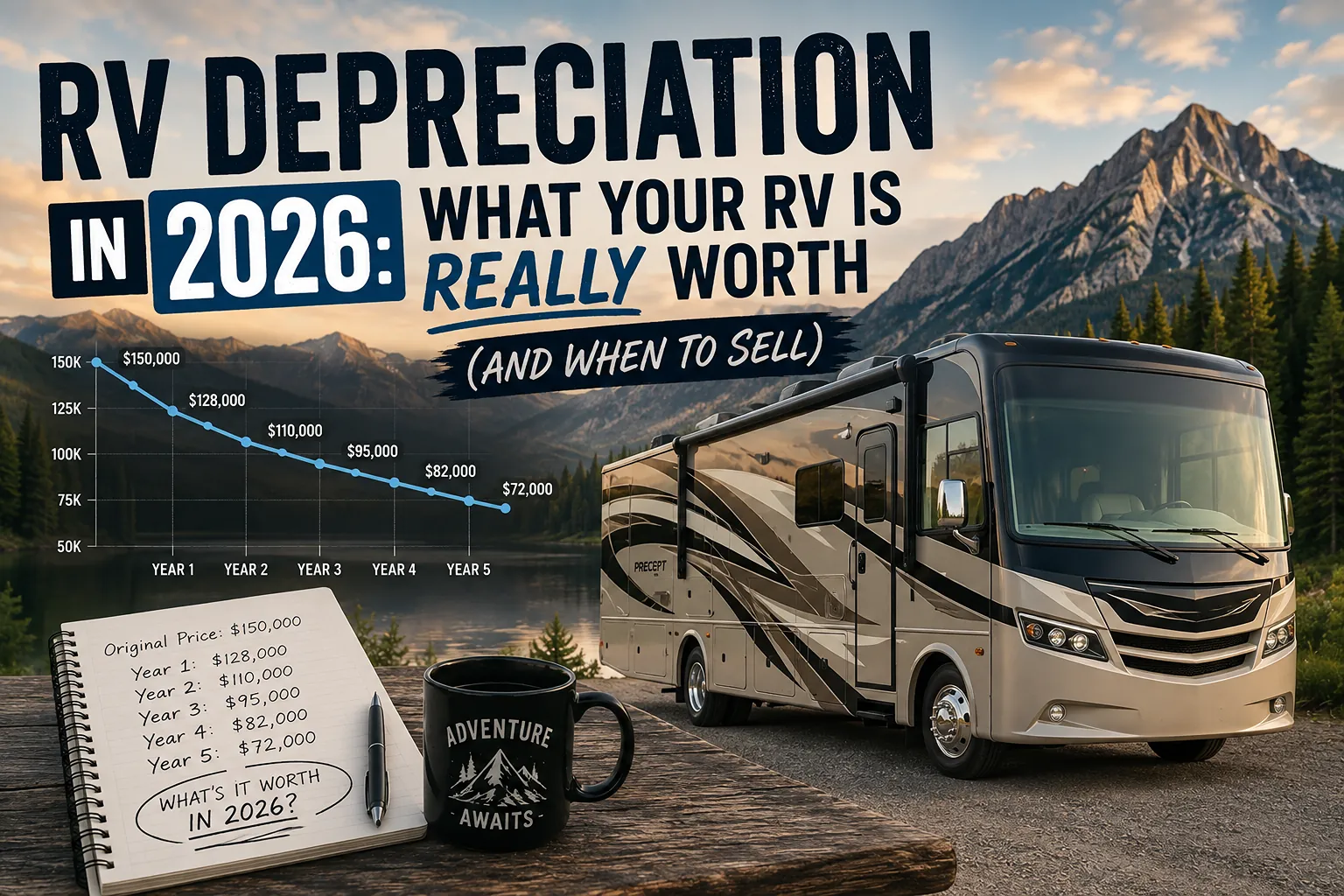
Table of contents
Depreciation is the single biggest cost of RV ownership — bigger than fuel, insurance, and maintenance combined for most owners. Yet almost nobody shops, owns, or sells with it in mind. Whether you're deciding what to buy or wondering if it's time to sell, the depreciation curve should be driving the decision.
Here's how it actually works in 2026, and how to use it to your advantage.
How Fast Does an RV Depreciate?
Most RVs lose roughly 20–30% of their value in the first year and around half of their original value within five to six years. Depreciation is steepest the moment a new unit leaves the lot, slows meaningfully after year three, and flattens out after year ten. The exact curve depends heavily on RV type, brand, and condition.
That front-loaded curve creates two big opportunities: buying units that are 2–4 years old (someone else paid the steep part), and selling before major age-related thresholds hit your value.
RV Depreciation by Type
| RV Type | Year 1 | Year 5 | Year 10 | Notes |
|---|---|---|---|---|
| Class A motorhome | -25–30% | -50–60% | -70%+ | Steepest curve of any type |
| Class C motorhome | -20–25% | -45–55% | -65% | Family demand softens the drop |
| Class B camper van | -15–20% | -35–45% | -55% | Best value retention of any motorhome |
| Travel trailer | -20% | -40–50% | -60% | Slower curve, lower starting point |
| Fifth wheel | -20–25% | -45% | -60% | Condition matters enormously |
Ranges reflect typical market patterns; individual rigs vary with mileage, condition, and brand reputation.
Why Do Class B Vans Hold Value So Well?
Class B camper vans depreciate slowest because demand keeps outrunning supply. The van life movement turned clean used camper vans into one of the most-searched categories in the entire RV market — we see it every week in what buyers search on TrueRVs, where Class B content and listings are consistently among our most-trafficked pages. A well-kept Sprinter-based van can still command 60–70% of its original price at five years old.
If you own one, you're sitting on the most liquid asset in the RV world. If you're shopping for one, our guide to the best Class B RVs under $100,000 shows where the value hides.
What Makes an Individual RV Depreciate Faster?
Five things accelerate value loss more than age itself: water damage (the number one value killer — even repaired), high mileage on motorhomes, deferred maintenance with no service records, smoke and pet odors, and dated interiors. Conversely, documented service history, new tires, and a deep clean before listing routinely add back thousands.
The difference between a "good condition" and "excellent condition" sale of the same rig is often 10–15% of the price. Almost all of that gap is preparation, not luck.
When Is the Best Time to Sell an RV?
The best time to sell is before your RV crosses a value threshold: before 10 years old (financing gets harder for your buyer on older units), before 100,000 miles on a motorhome, and before a major component — roof, tires, appliances — comes due. Seasonally, listings get the most buyer attention from late winter through early summer, when shoppers are planning their travel year.
Here's the part most owners miss: a buyer's ability to finance your rig sets your ceiling. Many lenders tighten terms on RVs older than 10–12 years, which shrinks your buyer pool right as your rig crosses that line. Selling at year 8 or 9 often nets more than selling at year 11, even accounting for two extra years of use.
How Do You Find Out What Your RV Is Worth in 2026?
Check what comparable rigs are actually listed and selling for — same model, similar year, similar mileage — rather than relying on book values alone, which lag the real market. Browse sold and active comparables on TrueRVs, note asking prices for your condition tier, and price just under the cluster to generate immediate interest.
Book guides are a starting point, but the live market is the truth. A rig is worth what an in-market buyer will message you about this week.
Ready to Sell? Here's Where It Moves Fastest
If the math says sell, the next question is where — and we've done the honest comparison of RV Trader, RVT.com, and TrueRVs for sellers. The short version: TrueRVs was built for today's sellers. Your listing gets in front of active, protected buyers — our Seller Shield blocks the spam and lowball bots that clog older platforms, which is exactly why real buyers on TrueRVs actually open and answer messages.
List your RV on TrueRVs — it takes minutes, and your listing goes live in front of one of the fastest-growing buyer audiences in the RV market.
Frequently Asked Questions
Do RVs ever appreciate? Rarely. The 2020–2022 market spike briefly pushed used prices above original MSRPs, but that was an anomaly. Plan around depreciation; treat appreciation as a lottery ticket.
Is it better to sell privately or trade in? Private sale almost always nets 10–20% more than trade-in value. Trade-ins buy convenience; private listings on a marketplace like TrueRVs buy you the difference.
How much does depreciation matter if I keep my RV forever? Less — but resale value is also your insurance against life changing. Health, family, and finances have turned many "forever rigs" into for-sale rigs. Owning something liquid is worth a premium.
What's the cheapest way to own an RV, depreciation included? Buy a 3–5 year old unit in excellent condition, maintain it meticulously, and sell before year ten. You skip the steep part of the curve on both ends. Our full cost-of-ownership breakdown runs the complete math.
Curious what your RV would fetch right now? List it on TrueRVs and find out — today's buyers are already searching for it.