RV Dealer Advertising: Where to Spend (and What to Cut) in 2026
TrueRVs Team 4 min read
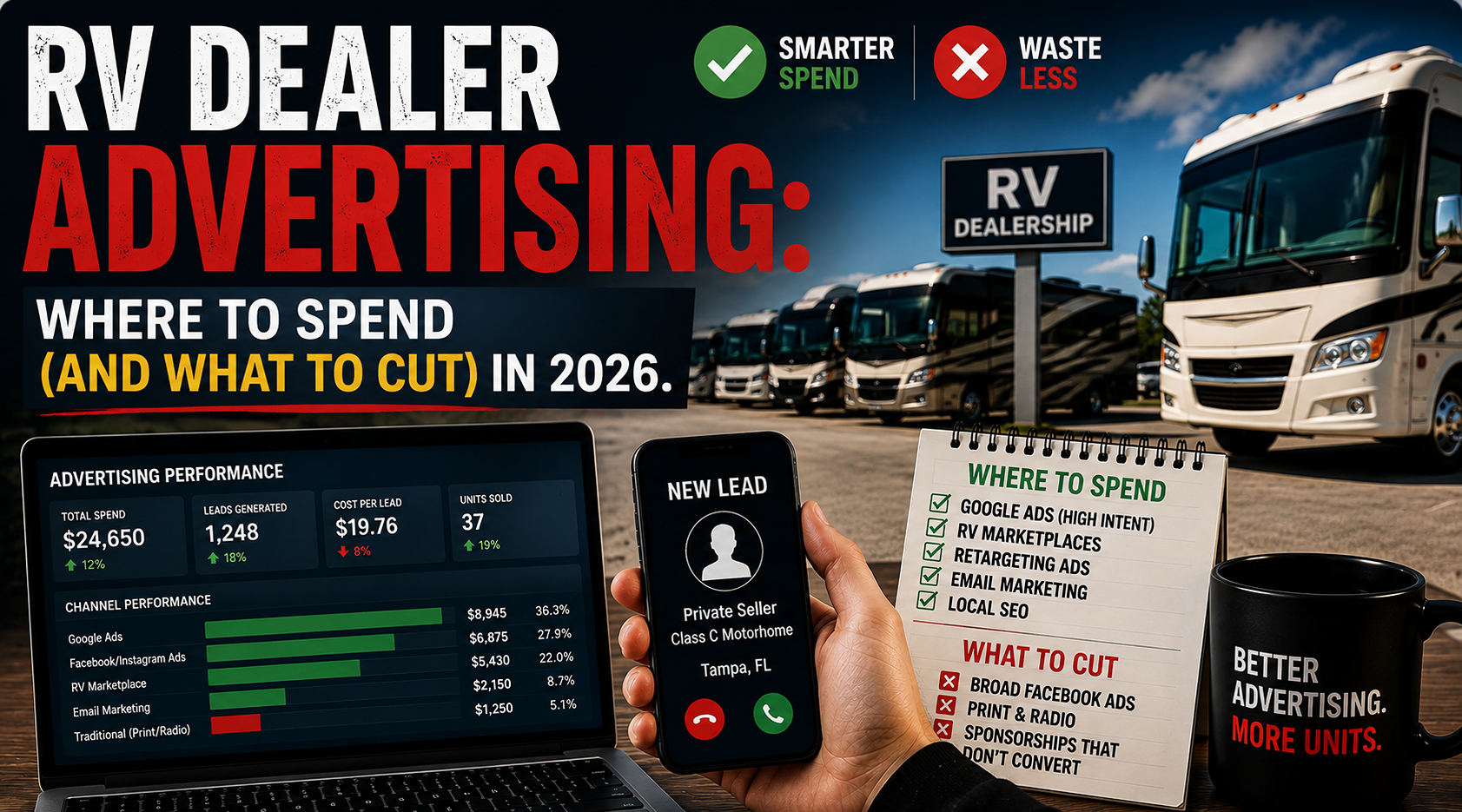
Every RV dealer has the same advertising question: where does the next dollar actually go? The listing site rep says upgrade your package. The radio rep says buyers still drive. The agency says brand awareness. They can't all be right, and your cost per sold unit says most of them aren't.
Here's an honest breakdown of the main RV dealer advertising channels in 2026, what each is actually good at, and where the industry is heading.
The only metric that matters
Judge every channel by cost per sold unit. Not impressions, not clicks, not even leads. A channel that produces two sold units from $800 beats one that produces forty "leads" from $2,000. If you can't trace sold units back to a channel, ask every buyer one question at closing: "Where did you first see this unit?" Write it down. Sixty days of that beats any analytics dashboard.
Channel by channel Marketplace listings, the backbone
Marketplace advertising is different in kind from every other channel: the audience is already shopping for an RV. The debate isn't whether to be on marketplaces. It's which ones, and at what price.
The legacy sites deliver real volume, but you pay for it: premium packages, long contracts, and your units stacked against tens of thousands of competitors, with the best placement auctioned to the deepest pockets. The same lead often goes to multiple stores.
The newer model, the one TrueRVs is built on, replaces pay-for-placement with AI matching. Our AI Shopper interviews each buyer (budget, tow vehicle, family, use case) and routes them to the specific units that fit. Your advertising advantage isn't a bigger badge on a search results page; it's being the right answer to a qualified buyer's actual question. With 11,000+ units live and growing, early dealers are getting visibility the big sites charge premium rates for.
Verdict: spend here first. Complete listings, real prices, every unit.
Google Ads, high intent on a tight leash
Search ads on "[brand] dealer near me" and "[model] for sale" terms capture ready buyers. Two rules: geo-fence to your realistic delivery radius, and send clicks to the specific inventory page, never the homepage. Skip broad terms like "RV" or "camper" unless you enjoy paying for daydreamers.
Verdict: worth it for branded and model-specific terms, capped tightly.
Meta (Facebook/Instagram), units and retargeting
Meta is weak at bottom-funnel intent but strong at two jobs: showing specific priced units to in-market audiences in your radius, and retargeting people who viewed your inventory. Video walkthroughs with the price on screen in the first ten seconds are the format that works. Boosting generic brand posts is where dealer ad budgets go to die.
Verdict: keep, but only for unit-level creative and retargeting.
Radio, billboards, TV, the legacy layer
These still build name recognition in your market, and for large multi-store groups they can pencil. But they're unmeasurable by design, and for a single-store dealership the same dollars nearly always work harder in measurable channels. If you keep them, tie them to an offer or event you can count.
Verdict: last dollars, not first, and only if you can afford unmeasurable spend.
Third-party lead packages
Bulk leads resold to several dealers at once produce the industry's worst close rates and burn out your sales team. Exception: exclusive, real-time leads matched to your actual inventory can work. Notably, that's what modern marketplace matching does natively.
Verdict: cut, unless exclusive and inventory-matched.
Where RV dealer advertising is heading
The direction of travel is clear: from renting attention to earning matches. Broadcasting your inventory to everyone was the only option when buyers browsed. Now that buyers increasingly start with AI-guided search, the winning position is having your inventory in the systems doing the matching.
That's what we're building at TrueRVs, including dealer promotion tools that haven't been seen in the RV industry before, launching first with our early dealer partners. The dealers who establish presence on matching-driven platforms now will hold the visibility advantage when the rest of the market catches up.
A sample budget split for a single-store dealer
For a store spending $5,000/month: roughly half to marketplace presence, a quarter to Google branded and model terms, 15% to Meta unit ads and retargeting, and the last 10% held for testing. Measure monthly, rebalance quarterly. (Adjust to your market; the principle is intent first.)
Frequently asked questions
What's the cheapest effective RV dealer advertising? Complete marketplace listings with real prices, and retargeting your own site visitors. Both are low-cost and high-intent.
Should I pay for premium placement on listing sites? Run the math per sold unit. Premium placement on a crowded incumbent often costs more than establishing strong presence on a growing platform where your inventory stands out by default.
How is advertising on TrueRVs different? You're not bidding for a spot on a results page. Buyers are matched to your units by an AI that has already qualified their budget, needs, and timeline, so your inventory gets shown precisely when it's the right answer.
Put your ad budget where the matching happens
We're onboarding dealer partners now. Early dealers get first access to promotion tools no one else in the industry has.
Email business@truervs.com and we'll walk you through it.