How to Get More RV Dealer Leads in 2026 (Without Overpaying for Them)
TrueRVs Team 4 min read
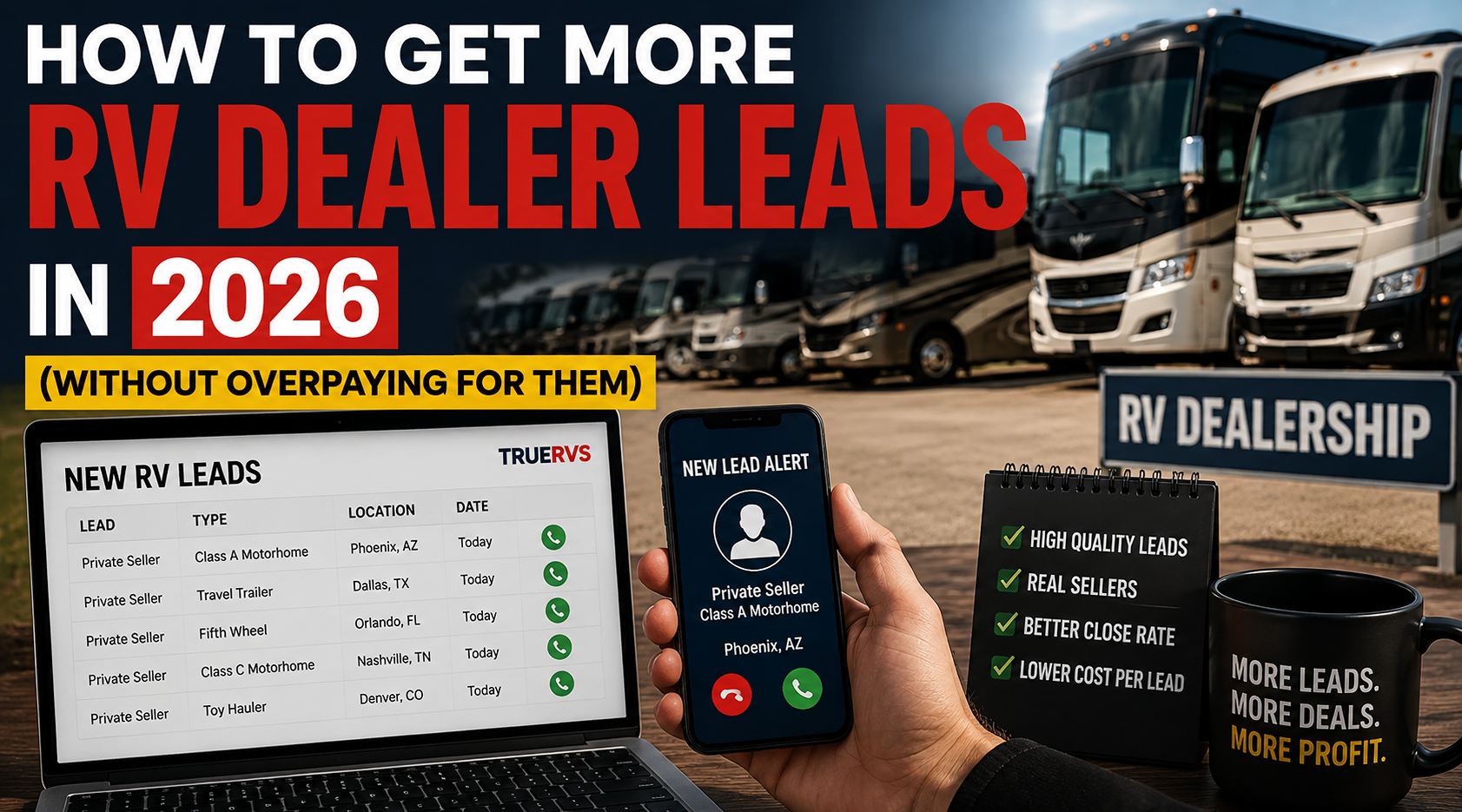
If you run an RV dealership, you already know the problem: leads keep getting more expensive, and the quality keeps getting worse. You pay for a listings package, the "leads" come in as half-filled forms and dead phone numbers, and at the end of the month you're left wondering which of your sold units, if any, actually came from that spend.
It doesn't have to work that way. This guide covers where RV dealer leads actually come from in 2026, which sources are worth your money, and how to stop paying for names and start paying for buyers.
What counts as a "good" RV lead?
Before comparing sources, define what you're buying. A good RV lead has three qualities:
Intent. They're actively shopping, not idly browsing. Someone who has compared floor plans, set a budget, and asked about a specific unit is worth ten people who clicked an ad. Fit. They're shopping for what you actually stock, in your delivery radius. Freshness. RV buyers move fast when they're ready. A lead that reaches you within minutes converts at a different rate than one batched into a next-day email.
Most dealer complaints about "bad leads" are really complaints about sources that fail one of these three tests.
Where RV dealer leads come from today
Listing marketplaces. Still the biggest source of purchase-ready shoppers, because people go to marketplaces specifically to buy. The catch is cost: the legacy marketplaces charge premium package rates whether or not the leads convert, often on long contracts.
Your own website and Google. High intent and low cost, but slow to build, and most dealer sites lose shoppers to clunky search and inventory pages that aren't indexed properly.
Paid social (Meta, TikTok). Good for awareness and remarketing, weaker for bottom-of-funnel intent. Works best promoting specific units with price, not brand ads.
Third-party lead sellers. Cheap per lead, but the same lead is often sold to multiple dealers, so you're racing three competitors to the same phone number.
Walk-ins, shows, and referrals. Still gold, still not scalable on their own.
The pattern: the closer a source sits to an actual buying decision, the better the lead. That's also exactly what the incumbents charge you the most for.
The problem with paying per listing package
Legacy marketplace pricing was built for a different era: you pay for placement, not performance. Your inventory sits next to thousands of competing units, upgraded placements go to whoever pays most, and the lead form sends the same shopper to several dealerships at once. You're not buying leads. You're renting shelf space.
That's the model a new generation of marketplaces is unwinding.
A different approach: let AI match the buyer to your unit
At TrueRVs, we built our marketplace around a simple idea: the best lead isn't a form fill. It's a shopper who has already been matched to the right unit.
Our AI Shopper works with buyers the way a great salesperson would. It asks how they'll use the RV, who's traveling, what they tow with, and what they can spend. Then it matches them to specific units in dealer inventory that actually fit. By the time that shopper contacts you, they're not asking "is this available?" They're asking about next steps.
For dealers, that means:
Leads that arrive pre-qualified. The AI has already narrowed budget, type, and use case before your name enters the conversation. Your inventory gets found by fit, not by ad budget. A shopper who needs a half-ton-towable bunkhouse gets shown your half-ton-towable bunkhouse. Marketing your competitors haven't seen. We're building promotion tools for dealer inventory that don't exist anywhere else in the RV space. Early partner dealers get first access as they roll out.
With 11,000+ RVs already live and inventory growing every week, buyers are on the site, and dealer inventory is what they're there to see.
Five things you can do this month to improve lead flow Audit your current cost per sold unit, not cost per lead. Divide each channel's monthly spend by units actually sold from it. Cut the worst channel and reallocate. Answer every lead in under 15 minutes. Response time is the single most controllable conversion lever in the industry. Put real prices on every listing. "Call for price" filters out serious shoppers, not tire-kickers. Get your inventory on emerging marketplaces early. Placement is cheapest and visibility is highest before your competitors arrive. Retarget your own website traffic. The cheapest lead is the shopper who already visited your inventory and left. Frequently asked questions
What does an RV lead cost in 2026? Depending on source and market, dealers commonly pay anywhere from a few dollars for shared third-party leads to well over $40 per lead through premium marketplace packages. The better question is cost per sold unit. A $40 lead that closes beats a $5 lead that doesn't answer the phone.
Are shared leads worth it? Rarely. If the same shopper is sent to three dealerships, you're paying for a foot race. Exclusive or matched leads cost more per contact and less per sale.
How is TrueRVs different from other listing sites? Buyers on TrueRVs are guided by an AI Shopper that matches them to specific units by budget, use case, and fit. The contact you receive is further down the funnel than a standard marketplace form fill.
Ready for leads that show up already matched to your inventory?
We're onboarding dealer partners now, and early dealers get first access to promotion tools no one else in the industry has seen yet.
Email us at business@truervs.com and we'll show you how your inventory performs on TrueRVs.