Why Your RV Isn't Selling (It's Not the Price)
TrueRVs Team 7 min read
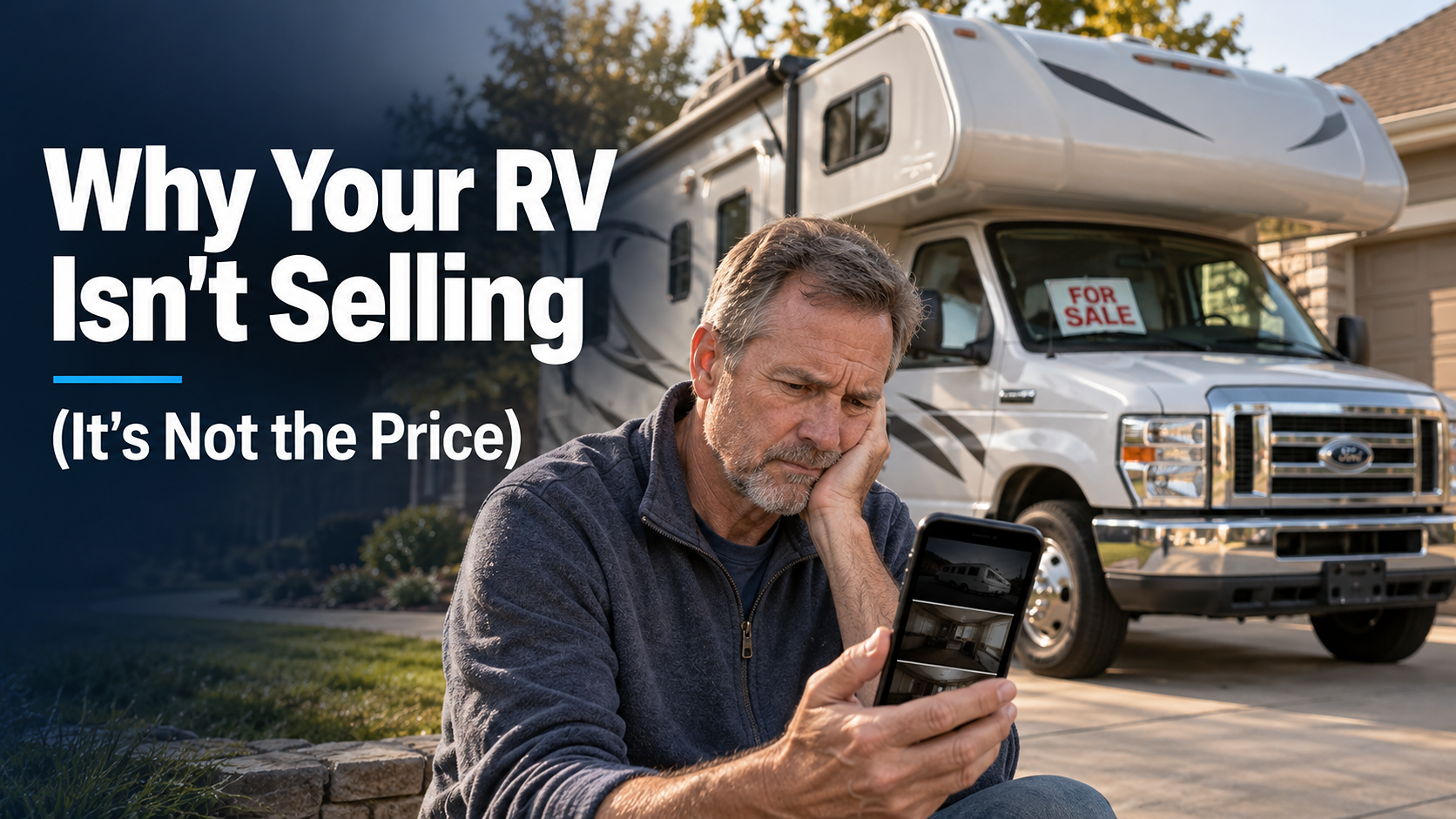
Table of contents
- 1. Your Photos Are Doing the Selling, and They Are Losing
- 2. Buyers Cannot Tell What They Are Looking At
- 3. You Are Listed Where the Buyers Are Not
- 4. Scammers Are Scaring You and Real Buyers Away
- 5. Your Listing Is Silent About Condition
- 6. You Are Slow to Respond
- 7. You Listed at the Wrong Time and Then Gave Up
- So What About the Price?
- The Fastest Way to Turn It Around
- Frequently Asked Questions
Why Your RV Isn't Selling (It's Not the Price)
You cleaned it up, took some photos, wrote a description, and put it online. A couple of messages came in the first day. One asked if it was still available and disappeared. One wanted to send a cashier's check for more than the asking price. Then silence.
So you do what every seller does. You drop the price. And it still sits.
Here is what most sellers never hear: price is usually not the reason an RV does not sell. Buyers who want your RV will pay a fair price for it. What stops them is everything that happens before they ever get to the price. Below are the seven real reasons RVs sit unsold, in the order we see them most, and exactly how to fix each one.
1. Your Photos Are Doing the Selling, and They Are Losing
Buyers scroll through dozens of listings in a few minutes. Your photos have about one second to stop the scroll. Most listings fail right here.
The common mistakes: photos taken at night or in a dark storage lot, the RV parked next to trash cans or a neighbor's fence, slides closed so the interior looks cramped, clutter on the counters, and only four or five photos total when buyers expect to see everything.
The fix: Move the RV somewhere open and shoot in daylight, ideally early morning or late afternoon. Open every slide. Clear every surface. Take at least 25 photos: every exterior side, the hitch or engine bay, every interior room, the bathroom, the bed, storage bays, the control panel, tires, and the roof. Show the flaws too. A buyer who sees a small scratch in a photo trusts you more than one who finds it in person after you hid it.
2. Buyers Cannot Tell What They Are Looking At
Open your listing and read only the title. Would a stranger know the year, make, model, and floor plan? Most titles say something like "Great RV, must see" and nothing else.
Buyers search by specifics. Someone looking for a bunkhouse travel trailer under 30 feet will never find "Great RV, must see." And when your description leaves out the length, sleeping capacity, dry weight, tank sizes, or whether it has a generator, buyers do not message you to ask. They move to the listing that already answered the question.
The fix: Put year, make, model, and floor plan in the title. In the description, list the specs a buyer needs to make a decision: length, sleeps, dry weight, hitch weight, tank capacities, generator, solar, slides, awning, and mileage or hours if motorized. Then tell the story: how you used it, what you replaced, what you loved about it.
3. You Are Listed Where the Buyers Are Not
This is the one sellers underestimate the most. You can have a perfect listing on a site that serious RV buyers stopped using years ago.
The legacy listing sites were built decades ago and it shows. They bury private listings under dealer inventory, make buyers fill out lead forms instead of messaging you, and do nothing to stop scammers. General marketplaces have plenty of traffic but almost none of it is a real RV buyer with a budget and a tow vehicle.
The fix: List where the buyers actually are. TrueRVs was built specifically for buying and selling RVs today. Your listing gets matched to real buyers by the AI Shopper based on their budget, floor plan needs, and towing setup, and buyers message you directly in real time instead of filling out a form and waiting. Sellers on TrueRVs are getting serious offers in days, not months, because the listing is in front of people who are actually shopping.
4. Scammers Are Scaring You and Real Buyers Away
If most of your messages are "is this still available" followed by a link, or an offer to overpay by check, you are spending your energy on fake buyers and getting worn down before a real one shows up. Real buyers notice this too. A listing that has been reposted five times because the seller gave up looks stale, and stale listings get skipped.
The fix: Stop selling on platforms with no protection. Seller Shield on TrueRVs screens every message before it reaches you, blocking the fake buyers, deposit scams, and spam that flood other sites. When your inbox only has real people in it, you respond faster, you sound more confident, and buyers can feel the difference.
5. Your Listing Is Silent About Condition
Buyers assume the worst about anything you do not mention. If your listing does not say when the roof was last sealed, whether the tires are original, or if it has ever had a leak, the buyer fills in the blank with "probably a problem."
Water damage is the number one fear of every used RV buyer. If you say nothing about it, they assume you are hiding it.
The fix: Be specific and be honest. "Roof resealed spring 2025, tires replaced 2024, no leaks, all appliances work, maintenance records included." One sentence like that removes more objections than a $2,000 price drop. If something is wrong, say so and price it in. Buyers respect honesty and they pay for it.
6. You Are Slow to Respond
A buyer who messages you at 7pm and hears back the next afternoon has already messaged three other sellers. RV buyers are often planning around a trip, a season, or a financing approval with a deadline. The seller who answers first usually gets the showing.
The fix: Turn on notifications and answer within the hour whenever you can. Have your answers ready for the questions everyone asks: Why are you selling? Any leaks? Does the title have a lien? Can I see it this weekend? On TrueRVs, real time messaging means the conversation happens right away instead of through a lead form that takes a day to reach you.
7. You Listed at the Wrong Time and Then Gave Up
RV buying is seasonal. Interest climbs in late winter and spring as people plan summer trips, and again in late summer and fall as buyers hunt for deals before storage season. Listing in the dead of a holiday week and pulling the listing after ten quiet days does not mean your RV cannot sell. It means you did not give it a fair shot.
The fix: Keep the listing live and keep it fresh. Update photos, add a video walkthrough, and answer every question quickly. On TrueRVs the top packages stay live until sold, so your listing does not expire and get buried right when buyer traffic picks up.
So What About the Price?
Price matters, but it is the last thing to change, not the first. If you fix the seven things above and are still getting views with no messages after two to three weeks, then look at price. Compare your RV against similar year, make, and condition listings on TrueRVs and see where you sit. If you are within a few percent of comparable listings, hold. If you are well above, adjust once and adjust enough to matter, rather than dropping $500 every few days, which trains buyers to wait.
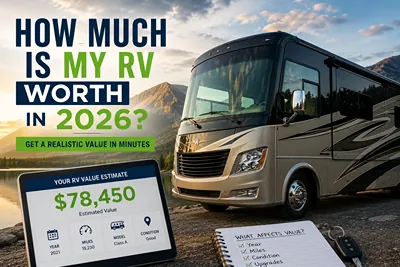
For a full breakdown of what your RV is actually worth right now, read our guide on how much your RV is worth in 2026.
The Fastest Way to Turn It Around
If your RV has been sitting, do this today: reshoot the photos in daylight with the slides open, rewrite the title with year, make, model, and floor plan, add the specs and a plain honest condition note, and move the listing to where real buyers are looking.
That last step is the one that changes everything. List your RV on TrueRVs and it gets matched to buyers who are actively looking for exactly your kind of RV, protected from scammers by Seller Shield, and messaged by real people in real time. Sellers who make the switch are often shocked by how quickly a dead listing comes back to life.
Your RV is not the problem. Where it is listed and how it is presented usually are. Fix those, and the offers come.
Frequently Asked Questions
How long should it take to sell an RV? A well presented, fairly priced RV on a marketplace with real buyers typically sells in a few weeks. Many sellers on TrueRVs see serious offers within 7 to 31 days. If you are past 60 days with no real interest, one of the seven issues above is almost always the cause.
Should I lower my RV price if it is not selling? Not first. Fix photos, title, description, and where it is listed before touching the price. If comparable listings on TrueRVs are meaningfully lower than yours after that, adjust once to a competitive number rather than in small steps.
Why do I only get scam messages on my RV listing? Because the site you are on does not screen buyers. General marketplaces and older listing sites are targeted by scammers who message every new listing. TrueRVs Seller Shield blocks these messages before they reach you.
Is it better to sell my RV to a dealer or privately? Private sales usually bring 10 to 20 percent more than a dealer trade in or cash offer. Dealers need room to resell at a profit. If you are willing to take good photos and answer messages, selling privately on TrueRVs puts that difference in your pocket.
Does a video help sell an RV? Yes. A two to three minute walkthrough filmed on a phone lets buyers feel the space and see that everything works. Listings with video get more serious inquiries and fewer wasted showings.
Tired of a listing that just sits? List your RV on TrueRVs and get it in front of real buyers today.