Used RV Inspection Checklist: What to Check Before You Buy (2026)
TrueRVs Team 8 min read
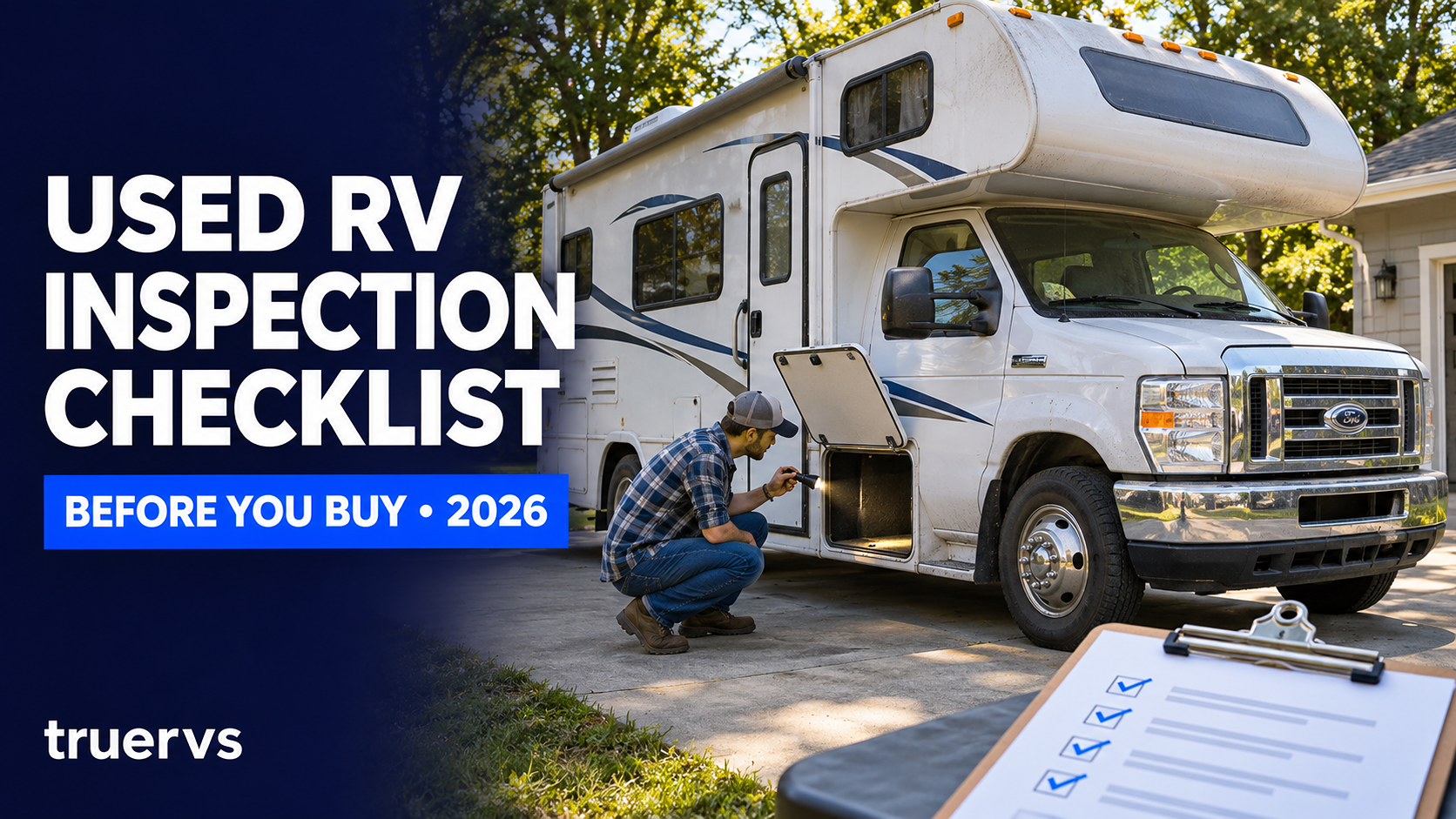
Table of contents
- What to Bring to an RV Inspection
- 1. Water Damage: Check This First
- 2. Roof and Exterior
- 3. Slide Outs
- 4. Interior
- 5. Plumbing and Holding Tanks
- 6. Appliances and Systems
- 7. Tires, Brakes, and Running Gear
- 8. Motorhome Engine and Chassis
- 9. Paperwork and History
- Red Flags That Should End the Deal
- Should You Hire a Professional RV Inspector?
- How to Use the Inspection to Negotiate
- Find Your Next RV the Smart Way
- Frequently Asked Questions
Used RV Inspection Checklist: What to Check Before You Buy (2026)
Before you buy a used RV, check for water damage first, because it is the most expensive problem and the easiest to hide. Then inspect the roof, walls, floors, slides, every appliance and system, the tires and their date codes, and for motorhomes the engine, generator, and chassis. Run everything on shore power and on battery. On any RV over about $20,000, a professional inspection costing $200 to $1,200 is worth it.
Shopping for an RV? Browse RVs for sale on TrueRVs, or let the AI Shopper match you with the right one.
Used RVs are one of the best values in recreation, since most of the depreciation has already happened. But a rig that looks perfect on a sunny afternoon can hide thousands of dollars in rot under the floor. Print this checklist, bring a flashlight, and give yourself at least two hours.
What to Bring to an RV Inspection
- A bright flashlight and a headlamp
- A moisture meter (about $25 online, and the single best tool for finding water damage)
- A ladder, if the seller does not have one
- A tire pressure gauge
- A notepad or your phone for photos of every issue
- Rubber gloves and old clothes
- Someone to help work the slides, lights, and jacks
Ask the seller to have the RV connected to power and water, with the propane tanks filled and the batteries charged, before you arrive.
1. Water Damage: Check This First
Water is the enemy of every RV. A leak around a roof vent or window can rot the walls and floor for months before it shows inside.
- Press on the floor everywhere, especially near the entry door, bathroom, kitchen sink, and in front of slides. Soft or spongy spots mean rot.
- Look at ceiling corners, around vents, skylights, and the AC unit for stains, ripples, or discoloration.
- Open every cabinet and look at the back corners and ceilings for staining or warped wood.
- Check under the bathroom and kitchen sinks for staining or swelling.
- Look at the exterior walls in low sunlight for bubbling, delamination, or waves in the fiberglass.
- Use a moisture meter along walls, around windows, and in corners. Readings well above the rest of the wall are a warning sign.
- Smell for mildew, especially with the RV closed up. Heavy air freshener is its own red flag.
Deal breaker: delamination on the sidewalls or a soft floor that runs more than a few inches. Repairs can run into the thousands and the damage is often bigger than it looks.
2. Roof and Exterior
- Get on the roof if it is rated to walk on, or inspect from a ladder if not.
- Check the roof membrane for cracks, tears, bubbles, and chalky or soft spots.
- Inspect sealant around every vent, skylight, antenna, solar mount, AC unit, and the edges. Cracked or peeling sealant means water has had a way in.
- Ask when the roof was last resealed, and when the roof membrane was replaced if it is older.
- Check all windows and the entry door seals for gaps or cracked rubber.
- Look at compartment doors, latches, and seals.
- Inspect the awning fabric, arms, and operation. Extend and retract it fully.
- Check exterior lights, marker lights, and the porch light.
3. Slide Outs
Slides are one of the most expensive systems to repair.
- Run every slide all the way out and all the way in. It should move smoothly without grinding, hesitating, or racking unevenly.
- Check the slide toppers or awnings for tears.
- Inspect the wiper seals and bulb seals around each slide.
- Look underneath slides for rot or rust on the floor and mechanism.
- Check the inside corners of the slide room for water stains.
4. Interior
- Test every interior light, outlet, and USB port.
- Open and close every cabinet, drawer, and closet.
- Check furniture, mattresses, and upholstery for wear, tears, or stains.
- Test window blinds, shades, and screens.
- Look for signs of rodents: droppings, chewed wires, or nesting material in cabinets and under the sink.
- Check the entry steps, grab handle, and screen door.
- Test the smoke, carbon monoxide, and propane detectors and check their expiration dates.
5. Plumbing and Holding Tanks
- Run the water pump on the fresh tank and on city water.
- Turn on every faucet, hot and cold, and the shower. Watch for low pressure or sputtering.
- Flush the toilet and watch for leaks at the base.
- Check under every sink and around the water heater for drips.
- Ask about the black and gray tank sensors and whether the tanks drain fully.
- Look underneath for leaks around the tanks and dump valves.
- Ask how the RV was winterized if you are buying in spring.
6. Appliances and Systems
Run every system on both shore power and battery or generator if possible.
- Air conditioner: cools within ten minutes, no loud rattling.
- Furnace: lights and blows warm air.
- Water heater: heats on both propane and electric if it is a dual unit.
- Refrigerator: cooling on both electric and propane. Let it run during the visit.
- Stove, oven, and microwave all work.
- Generator: starts easily, runs under load, and has reasonable hours. Ask for service records.
- Converter and inverter work, and the batteries hold a charge. Ask how old the batteries are.
- Solar system, if equipped, charges the batteries.
- Leveling jacks or stabilizers extend and retract.
- TV, entertainment, and backup camera work.
7. Tires, Brakes, and Running Gear
Tires age out before they wear out on most RVs.
- Find the four digit DOT date code on every tire. The first two numbers are the week and the last two are the year. Most RV tire makers recommend replacement around 5 to 7 years old regardless of tread.
- Check for cracking in the sidewalls, uneven wear, and bulges.
- Check the spare.
- On towables, look at the axles, leaf springs, and shackles for rust or damage, and check the brakes and breakaway switch.
- Inspect the hitch, coupler, or kingpin for wear and cracks.
- Check the frame for heavy rust, cracks, or welding repairs.
8. Motorhome Engine and Chassis
For Class A, B, and C motorhomes, inspect the drive train like you would any used vehicle, then some.
- Check the oil, transmission fluid, and coolant for level and condition.
- Look for leaks under the engine and transmission.
- Start it cold if you can. Listen for knocking, ticking, or smoke.
- Test drive at highway speed. Check braking, steering, alignment, and shifting.
- Test the dash AC and heat, wipers, and all gauges.
- Ask for chassis maintenance records and run the VIN for recalls on the NHTSA website.
- On diesels, ask about the last coolant service and check for warning lights.
9. Paperwork and History
- The title is in the seller's name and the VIN on the title matches the RV.
- There are no open liens, or the seller has a clear payoff plan with their lender.
- Maintenance records, especially roof, generator, and chassis service.
- Owner's manuals and any transferable warranty.
- Open recalls for both the chassis and the RV coach.
If anything about the title or payment process feels off, slow down. Our guide to RV scams in 2026 shows the patterns to watch for.
Red Flags That Should End the Deal
- Soft floors or delamination on the walls
- Fresh paint or new paneling in one spot, which can hide water damage
- A seller who will not let you inspect, test systems, or bring an inspector
- Title not in the seller's name, or a salvage or rebuilt title they did not disclose
- Heavy deodorizer smell
- A price that is far below comparable listings with no clear reason
Should You Hire a Professional RV Inspector?
On any RV over about $20,000, yes. A certified inspector, such as one trained through the National RV Inspectors Association, typically charges $200 to $1,200 depending on the size and type of RV and how deep the inspection goes, and the inspection usually takes 3 to 8 hours. Many also offer fluid analysis for engines, generators, and transmissions.
Most sellers expect it, and a good inspection report is your best negotiating tool. Every issue it finds is a documented reason to ask for a lower price or a repair before closing.
How to Use the Inspection to Negotiate
Price out the issues before you make an offer. A worn set of tires, an old battery bank, or a roof that needs resealing are all fair reasons to adjust. Bring specific numbers rather than a vague request for a discount, and you will usually meet in the middle. If the inspection turns up major water damage or structural problems, walking away is often the cheapest choice.
Find Your Next RV the Smart Way
Start with listings that tell you the whole story. On TrueRVs, listings come with detailed specs and photos, and the AI Shopper matches you to RVs that fit your budget, floor plan, and tow vehicle. Browse RVs for sale, and if you are still choosing a type, read Class B vs Class C: which should you buy.
Frequently Asked Questions
What is the most important thing to check on a used RV? Water damage. Check floors, walls, ceilings, and cabinets for soft spots and stains, and use a moisture meter.
How much does a used RV inspection cost? Typically $200 to $1,200, depending on the RV's size and how detailed the inspection is.
How old is too old for RV tires? Most manufacturers recommend replacing RV tires around 5 to 7 years old, even if the tread looks good. Check the DOT date code.
Should I buy a used RV with water damage? Only if the damage is minor, fully repaired, and priced in. Widespread rot or delamination is usually not worth it.
Can I inspect an RV myself? Yes, with this checklist. On higher priced RVs, add a professional inspection for the engine, generator, and anything you cannot test.
Found one you like? Browse RVs on TrueRVs and let the AI Shopper find the rigs that fit how you travel.
More from TrueRVs: RVs for sale · Sell my RV · AI Shopper