Class B vs Class C RV: Which Should You Actually Buy in 2026?
TrueRVs Team 5 min read
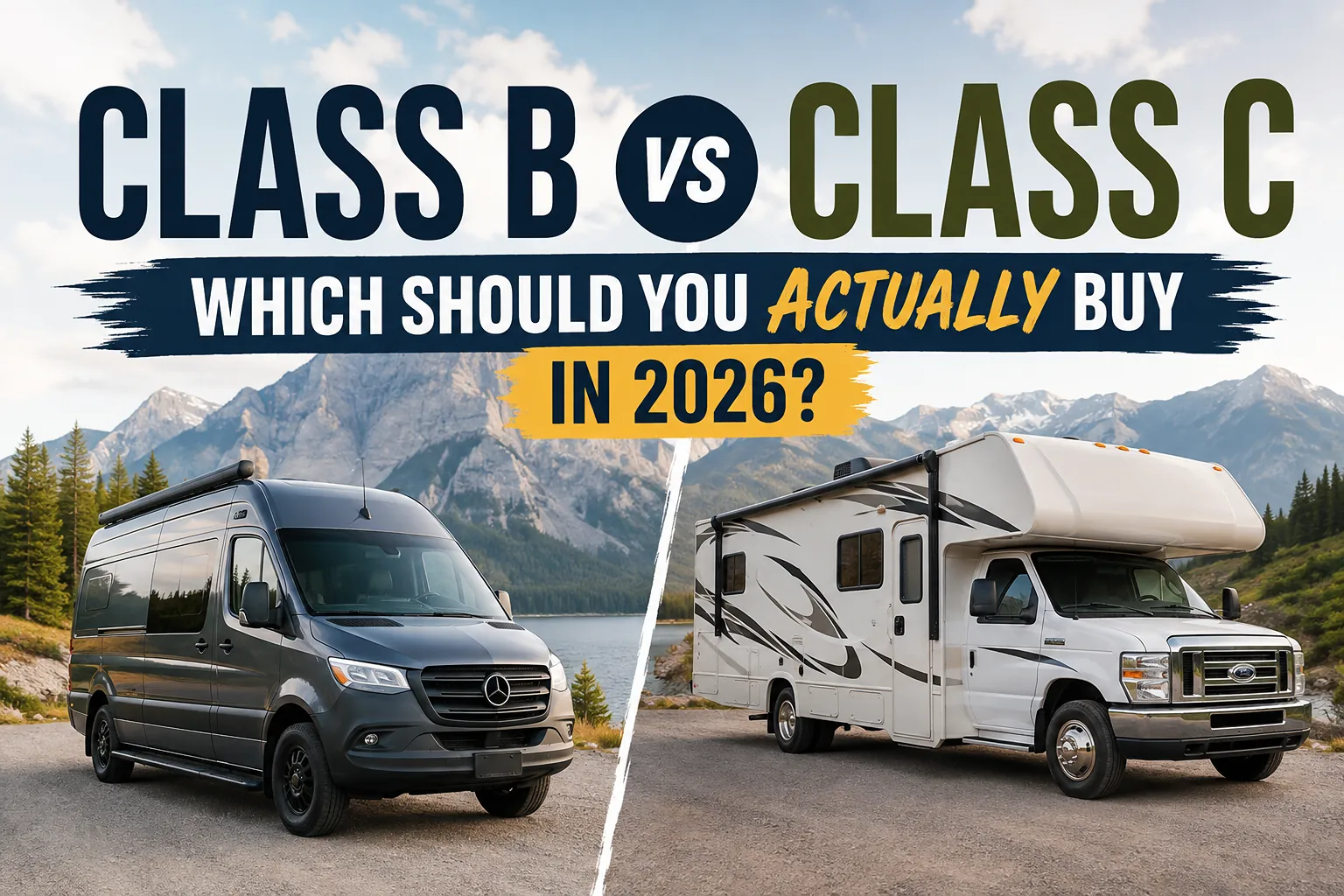
Table of contents
- What's the Difference Between a Class B and a Class C RV?
- Class B vs Class C: Side-by-Side Comparison
- Which Is Cheaper: Class B or Class C?
- Which Gets Better Gas Mileage?
- Which Is Easier to Drive and Park?
- Which Has More Living Space?
- Which Holds Its Value Better?
- So Which One Should You Buy?
- Where to Buy a Class B or Class C RV in 2026
- Frequently Asked Questions
Choosing between a Class B and a Class C is the most common crossroads in RV shopping — and the two are more different than most first-time buyers expect. One is a nimble van you can park anywhere; the other is a rolling apartment for the whole family. Here's how to make the call with confidence.
At TrueRVs, we see thousands of shoppers cross-shop these two categories every week, and the search data tells us exactly where people get stuck. This guide answers the questions buyers actually ask, in the order they ask them.
What's the Difference Between a Class B and a Class C RV?
A Class B is a camper van — a self-contained motorhome built inside a standard van body, usually 17–24 feet long. A Class C is a mid-size motorhome built on a truck or van cutaway chassis with a distinctive cab-over bunk, typically 24–33 feet. Class Bs prioritize mobility; Class Cs prioritize living space.
That one trade-off — mobility versus space — drives almost every other difference on this list.
Class B vs Class C: Side-by-Side Comparison
| Class B Camper Van | Class C Motorhome | |
|---|---|---|
| Typical length | 17–24 ft | 24–33 ft |
| Typical new price | $120,000–$250,000+ | $90,000–$180,000 |
| Fuel economy | 16–22 MPG | 8–14 MPG |
| Sleeps | 2 (some 3–4) | 4–8 |
| Bathroom | Compact wet bath | Full dry bath (most models) |
| Drivability | Like a large van | Like a moving truck |
| Where you can park | Standard spaces, cities, trailheads | RV sites, large lots |
| Resale value | Strongest in class | Moderate |
| Best for | Couples, solo travelers, weekenders | Families, long trips, full-timers |
Which Is Cheaper: Class B or Class C?
Class C motorhomes are cheaper to buy, but Class B vans are often cheaper to own. A new Class C typically starts around $90,000–$120,000 while comparable Class B vans start near $120,000–$150,000. But Class Bs win on fuel, insurance, storage, and — critically — depreciation, where they hold value better than any other motorhome type.
If the purchase price is your main constraint, the used market changes the math entirely. Well-kept used examples of both classes list every day on TrueRVs' buy page, often 30–40% below their original sticker. And if you're wondering what ownership really costs beyond the payment, our breakdown of what it really costs to own an RV in 2026 covers insurance, storage, maintenance, and the numbers nobody mentions at the dealership.
Which Gets Better Gas Mileage?
Class B vans get roughly double the fuel economy of Class C motorhomes. Most diesel Sprinter-based Class Bs return 16–22 MPG, while gas Class Cs typically manage 8–14 MPG. Over 10,000 miles a year, that difference alone can save a Class B owner $1,500–$2,500 annually at 2026 fuel prices.
Which Is Easier to Drive and Park?
Class B wins, and it isn't close. A Class B drives like the van it is — it fits in a standard parking space, clears most parking garages by inches, and handles city streets, national park roads, and tight campgrounds without drama. A Class C requires wider turns, dedicated parking, and more confidence backing up.
This is the factor first-time buyers underestimate most. If the thought of maneuvering a 30-foot vehicle makes you hesitate to take spontaneous trips, the smaller rig you'll actually use beats the bigger rig that sits in storage.
Which Has More Living Space?
Class C wins decisively on space. The cab-over bunk adds a permanent bed without consuming floor plan, most models include a full dry bathroom, a real kitchen, and slide-outs that expand the living area at camp. A family of four can live comfortably in a Class C; in a Class B, they can survive a weekend.
For couples considering going all-in on the lifestyle, our guide to the best RVs for full-time living breaks down which floor plans actually work when the RV is your only home.
Which Holds Its Value Better?
Class B camper vans have the strongest resale value of any motorhome category. Demand from the van life movement continues to outrun supply, and clean used Class Bs — especially 4x4 Sprinter-based models — routinely sell within days of listing. Class Cs depreciate faster, though family-friendly floor plans stay in steady demand.
We watch this happen in real time on our marketplace: well-priced Class B listings on TrueRVs are among the fastest to generate buyer messages of anything on the platform. If resale flexibility matters to you, that liquidity is worth factoring into the purchase.
So Which One Should You Buy?
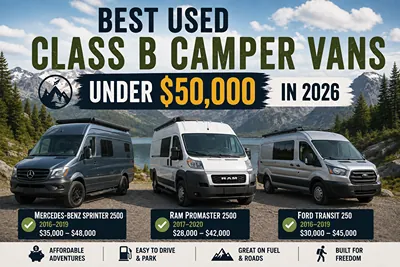
Buy a Class B if: you travel as a couple or solo, you value spontaneity, you want to camp in places big rigs can't reach, and you'd rather have quality in a small footprint than square footage. Start with our roundup of the best Class B camper vans of 2026 — or, if you're value-hunting, the best Class B RVs under $100,000.
Buy a Class C if: you travel with kids or a group, you take longer trips where living space earns its keep, you want a real bathroom and a real kitchen, and your budget rewards space-per-dollar.
Still torn? Rent each for a weekend before you buy. Two trips will teach you more than two hundred reviews.
Where to Buy a Class B or Class C RV in 2026
The fastest-growing selection of both classes is on TrueRVs, where new listings from dealers and private sellers go live every day. Unlike the legacy listing sites, TrueRVs was built around how people actually shop in 2026 — our AI Shopper matches you to the right rig by floor plan, budget, towing needs, and how you plan to travel, and Seller Shield protects every conversation from the spam that plagues older platforms.
Browse Class B and Class C inventory nationwide, message sellers directly, and let the right RV find you.
Frequently Asked Questions
Is a Class B or Class C better for beginners? A Class C is usually easier for beginners on a budget, while a Class B is easier for beginners intimidated by driving something large. If you can comfortably drive a moving truck, start with the class that fits your travel group.
Can a family of four use a Class B? A few Class B models sleep four using pop-tops or convertible dinettes, but it's tight for anything beyond weekend trips. Most families are happier in a compact Class C.
Do Class B vans really hold their value? Yes — Class Bs consistently show the slowest depreciation of any motorized RV category, and clean used examples remain in high demand on marketplaces like TrueRVs.
What about Class A motorhomes? Class As offer the most space and the highest cost of entry, operation, and depreciation. Most buyers deciding between B and C have correctly ruled out Class A already.
Ready to compare real listings side by side? Start shopping on TrueRVs — the modern RV marketplace built for today's buyers.