RV Depreciation: What Your RV Is Really Worth in 2026
TrueRVs Team 4 min read
Every RV owner eventually types the same question into Google: what's my RV worth? And the honest answer starts with understanding depreciation, because an RV's value has less to do with what you paid and more to do with a curve that started falling the day it left the dealer lot.
Here's how that curve works, what speeds it up, what slows it down, and how to land on a real number for your rig.
The shape of the curve
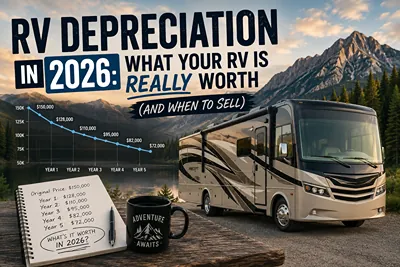
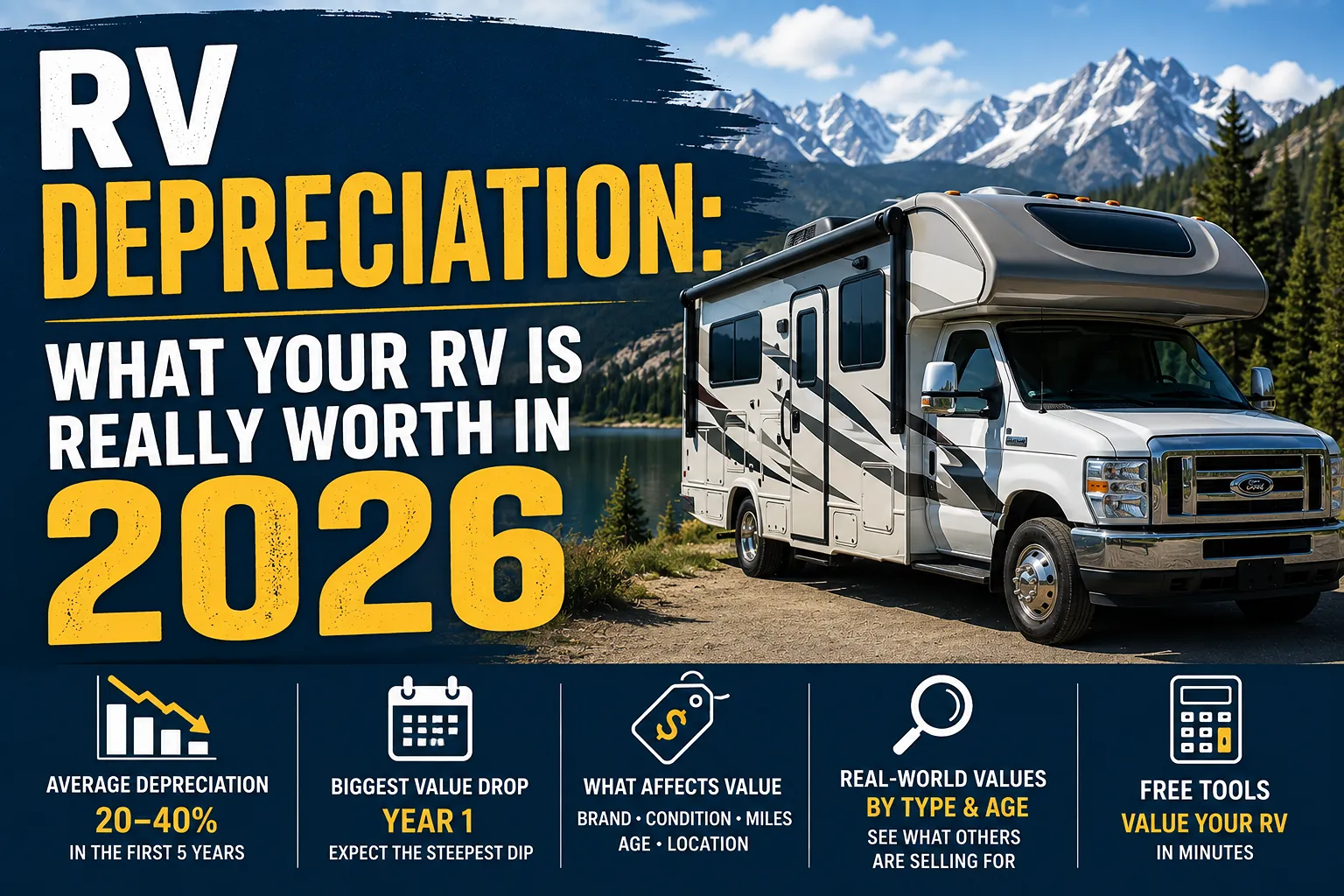
RVs depreciate fastest at the very beginning. As a general rule of thumb, a new RV loses roughly 20% of its value in the first year, with the steepest drop happening the moment it's titled. By year five, many units have given up 35 to 45% of their original price, and by year ten the typical RV is worth somewhere around a third to half of what it sold for new, depending heavily on type and condition.
Then something interesting happens: the curve flattens. The difference in value between a 12-year-old and a 15-year-old RV is often small, because at that point condition matters far more than age. A meticulously kept 2012 unit can outsell a neglected 2018.
These are patterns, not guarantees. Market conditions move the whole curve up or down, as anyone who sold an RV during the 2021 boom (or bought one at its peak) remembers vividly.
Depreciation by type: not all RVs fall alike
Class A motorhomes depreciate the hardest, especially gas models in the early years. Big initial price tags fall fast.
Class C motorhomes follow a similar but slightly gentler path than Class A.
Class B camper vans have held value comparatively well in recent years, helped by strong demand and their usefulness as everyday vehicles.
Travel trailers depreciate more slowly than motorhomes in dollar terms, partly because there's no engine or drivetrain aging alongside the coach. They're also cheaper to start with, so the percentage drops translate to smaller dollar losses.
Fifth wheels behave like travel trailers, with premium brands holding value noticeably better than entry-level ones.
Brand matters within every category. Units from manufacturers with reputations for build quality and strong owner communities consistently resell above the pack.
What accelerates depreciation Water damage, the single biggest value killer. Even repaired, it haunts resale. Missing maintenance records. An undocumented RV is priced like a neglected one. Heavy cosmetic wear, since buyers price what they can see. Aftermarket modifications done poorly, especially electrical. High mileage on motorhomes, relative to age. What slows it down Documented maintenance, especially roof resealing, bearing service, and winterization. A folder of receipts is worth real money. Covered or indoor storage. Sun and weather age an RV faster than miles do. Popular floorplans. Bunkhouses and rear-living layouts sell to bigger buyer pools, which supports price. Completed recalls and clean titles, both of which remove buyer objections before they start. So what's your RV actually worth?
Book values are a starting point, but the fastest way to reality is watching what comparable units are actually listed and sold for: same model, similar year, similar condition, in your region. Browse current listings on TrueRVs to see live asking prices for RVs like yours right now. Real listings tell you what the market believes today, which no depreciation table can.
When you compare, be brutally honest about condition. Sellers routinely rate their RV a point higher than buyers will, and that one point is usually the gap between listings that sell and listings that sit.
Turning depreciation into strategy
If you're thinking about selling, depreciation has one clear message: waiting costs money. An RV you're not using is still depreciating, still costing storage and insurance, and still aging its seals and tires. The best financial move for an unused RV is almost never "sell it eventually."
When you're ready, list your RV on TrueRVs. It takes minutes, your listing reaches thousands of active shoppers, and our AI Shopper matches your RV with buyers hunting for exactly what you have.
Frequently asked questions
How much does an RV depreciate per year? Steepest in year one (roughly 20% for new units as a rule of thumb), then gradually less each year until the curve flattens around the 10 to 12 year mark. Type, brand, and condition all shift the numbers.
Do any RVs hold their value? Nothing appreciates reliably, but Class B vans, premium fifth wheels, and cult-favorite brands with strong owner communities depreciate the slowest.
Is it better to sell my RV now or wait until spring? Run both numbers: what you might gain from spring demand versus months of storage, insurance, payments, and continued depreciation. For many sellers the math favors listing sooner, especially for four-season and premium units that sell year-round.
Sources: Book values referenced from J.D. Power RV valuations (formerly NADA Guides). For what the market is asking right now, compare live listings on TrueRVs.