How to Negotiate When Selling Your RV: 7 Tips That Protect Your Price
TrueRVs Team 3 min read
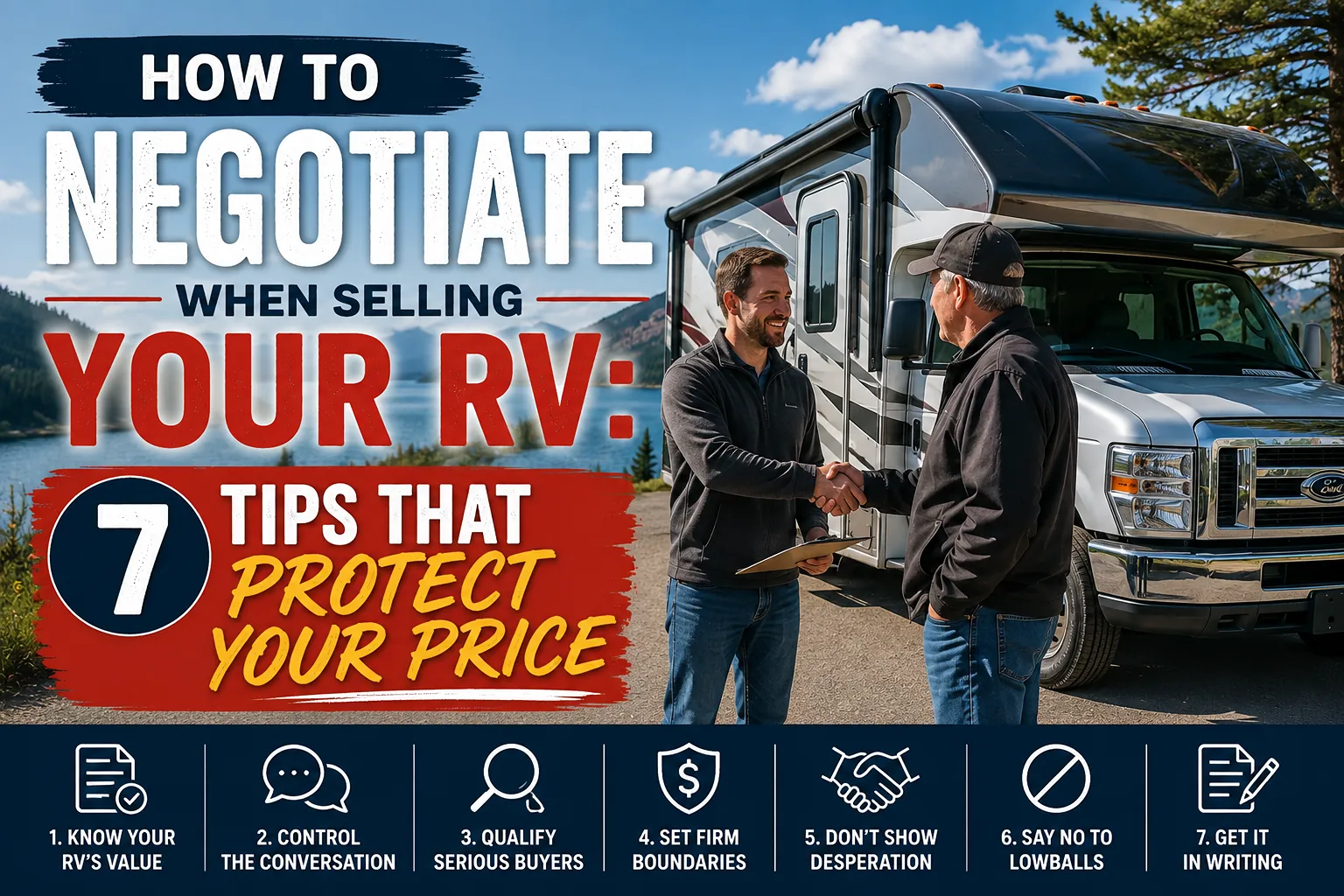
Most RV sellers lose money in the last hour of the sale. Not because their RV was overpriced, and not because the buyer was ruthless, but because the seller walked into the negotiation without a plan. The buyer had one.
Here are seven tactics that keep the price you deserve from leaking away at the finish line.
- Know your floor before anyone makes an offer
Decide your walk-away number before the first message arrives, while you're still thinking clearly and nobody's standing in your driveway with cash. Everything above that number is negotiating room. Without a floor, every offer feels like pressure; with one, you can hear "would you take..." calmly, because you already know the answer.
Set the floor from data, not feelings: check what comparable units (same model, similar year and condition) are actually listed for, then be honest about where yours stands.
- Price with room, but not a canyon
Buyers expect to negotiate on a private sale. Price your RV at your floor and you'll end up below it; price it 30% high "to leave room" and serious buyers won't even inquire. A cushion of roughly 5 to 10% above your realistic target gives buyers a win to negotiate toward without scaring them off the listing.
- Let the paperwork negotiate for you
The strongest negotiating move happens before the negotiation: a folder with service records, title, weight ratings, and receipts for recent work like new tires, brakes, bearings, or a roof reseal. Every documented repair is an objection the buyer can't raise. "The tires are probably old" dies instantly when you hand over last spring's receipt. Sellers with paperwork defend their price; sellers without it donate hundreds per undocumented question.
- Disclose flaws before the buyer finds them
It feels backwards, but showing the flaw first is a price defense. If you point out the soft spot by the door and explain that your price already reflects it, it's priced in. If the buyer discovers it during the walkthrough, it becomes a discount request, and now everything else you said is suspect too. Honest sellers close faster and closer to asking.
- Handle lowballs with a question, not a counter
Someone will offer you 60% of asking. Don't get angry and don't counter yet. Ask: "How did you get to that number?" Real buyers with a reason (comparable listings, a repair estimate) are starting a negotiation you can work with. Buyers with no answer were fishing, and your question politely ends the fishing trip. Never negotiate against a number that has no reasoning behind it.
- Trade concessions, never give them
If you come down on price, get something back: a faster close, cash instead of a financing contingency, buyer handles transport, or the sale happens this weekend. "I can do $500 less if we close by Saturday" reads completely differently than just dropping $500, and it stops the pattern where each concession invites a request for another one.
- Use competing interest honestly
If multiple buyers are asking about your RV, say so, plainly and truthfully: "I have two other people coming to see it this week." Nothing motivates a serious buyer like the real possibility of losing the RV. This only works when it's true, which is one more reason to list where your RV actually gets seen by enough buyers to create that interest.
The meta-tip: negotiation starts with the listing
Every tactic above works better when your listing generates real demand. Complete photos, honest description, a fair starting price, and enough eyeballs. One interested buyer is a negotiation; three interested buyers is an auction.
List your RV on TrueRVs and our AI Shopper will put it in front of buyers already looking for exactly your type, year, and price range. Matched buyers arrive serious, and serious buyers negotiate less.
Frequently asked questions
Should I put "OBO" in my RV listing? Skip it. "Or best offer" tells buyers your price isn't real before negotiations even start. Buyers will negotiate anyway; you don't need to announce your flexibility in the headline.
How much less than asking should I expect to get? Well-priced private-sale RVs commonly close within about 5 to 10% of asking. If offers keep coming in far below that, the market is telling you the asking price is off.
Is it safe to accept a cashier's check for an RV? Verify funds with the issuing bank before signing over the title, or better, complete the transaction inside the buyer's bank. Legitimate buyers won't object to a safe closing process.
Sources: For researching a fair asking price, compare live RV listings on TrueRVs and book values from J.D. Power RV valuations (formerly NADA Guides).