
Why RV Dealers Are Moving Away From Legacy Marketplaces in 2026

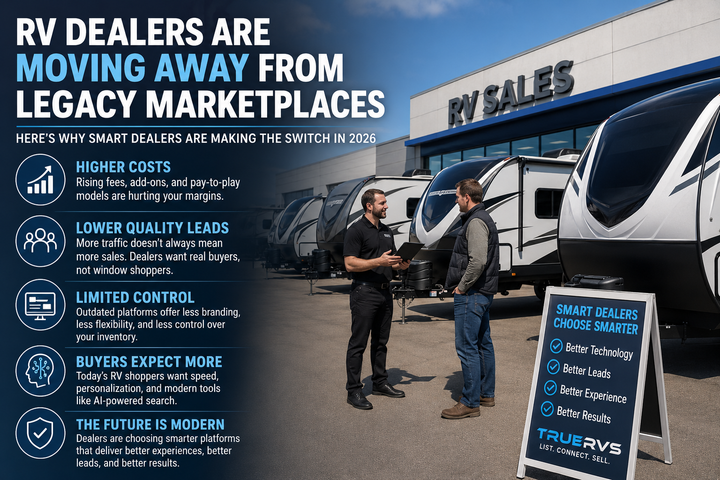
For nearly two decades, online marketplaces have been one of the most important parts of how RV dealerships advertise inventory. These platforms gave dealers the ability to showcase units online, reach buyers outside of their immediate market, and generate leads at scale. For a long time, this model worked well because the options were limited and buyer behavior was much simpler.
But in 2026, the RV industry is in a completely different place.
The way buyers shop has evolved dramatically. Consumers are more informed, more selective, and more digital than ever before. Before stepping foot into a dealership, many buyers have already spent weeks researching floorplans, brands, towing capacities, financing options, and resale values. They often know exactly what they want before making first contact.
At the same time, dealership marketing costs have increased significantly. Between Google Ads, social media advertising, CRM tools, inventory management systems, and third-party listing fees, dealers are spending more money than ever to compete online.
This combination has created a major shift in how dealerships think about advertising.
The question is no longer simply “Where can we list inventory?”
The real question has become:
Where are serious buyers actually spending their time, and which platforms are giving us the strongest return on investment?
That shift in thinking is one of the biggest reasons more RV dealers are starting to move away from legacy marketplaces and explore newer, faster, and more modern alternatives.
The RV Buying Process Has Changed More Than Most Dealers Realize
A decade ago, online RV shopping was relatively simple. Buyers would browse a few listing sites, compare prices, maybe visit a couple dealerships, and make a decision. There was less information available and fewer digital tools to help narrow options.
Today, that process looks very different.
Buyers now expect a highly personalized experience. They are no longer satisfied with scrolling through hundreds of unrelated listings just to find something close to what they want. Instead, they expect advanced filters, instant messaging, transparent pricing, better photos, financing options, and intelligent search tools.
This shift has changed the importance of where inventory is listed.
A marketplace that feels outdated, slow, or cluttered creates friction.
And friction kills conversions.
Modern buyers are used to the speed of platforms like Amazon, Zillow, and AutoTrader. That expectation has carried over into RV shopping. They want clean interfaces, fast loading pages, better search functionality, and more relevant results.
For dealers, this matters because the buyer’s online experience directly affects lead quality.
If a shopper has a better experience finding the right RV, they are far more likely to become a qualified lead.
That’s why the platform itself now matters just as much as the inventory being displayed.
Rising Advertising Costs Are Forcing Dealers to Rethink ROI
Dealer advertising costs have become one of the biggest pain points in the RV industry.
Most dealerships today are managing multiple layers of marketing spend at the same time. There’s the cost of maintaining a strong website, running paid search campaigns, investing in Facebook and Instagram ads, managing CRM systems, retargeting abandoned leads, and paying third-party listing platforms.
For many dealers, these costs can add up to tens of thousands of dollars per month.
That puts enormous pressure on return on investment.
Years ago, many dealers focused heavily on volume. If a marketplace could deliver enough traffic and enough leads, the cost felt justified. But that thinking has changed.
Today, dealers are becoming far more focused on efficiency.
They want to know:
How much does each lead cost?
How many of those leads are real buyers?
How many turn into appointments?
How many close?
These are the questions driving modern dealership marketing.
And in many cases, dealers are realizing that not all marketplaces perform equally.
A platform with lower traffic but stronger buyer intent can often outperform a larger platform with less engaged traffic.
That realization is one of the biggest reasons dealers are diversifying.
Brand Visibility Has Become Just as Important as Inventory Visibility
One of the biggest weaknesses of traditional listing platforms is that they often prioritize units over dealership identity.
The RV gets seen.
But the dealer doesn’t.
That may not have mattered as much in the past, but it matters a lot now.
Modern buyers care deeply about who they are buying from. They research dealer reviews, response times, reputation, inventory quality, and customer experience before making contact.
That means dealerships need more than just listing exposure.
They need brand presence.
This is where newer marketplaces are beginning to create an advantage.
Dedicated dealer pages, better branding opportunities, direct messaging systems, and custom dealer experiences help dealerships build trust before the first conversation ever happens.
That trust can have a direct impact on close rates.
Because when a buyer already feels comfortable with the dealership, the sales process becomes easier.
Dealerships that understand this are increasingly looking for platforms that help build both visibility and trust.
Lead Quality Is Becoming More Important Than Lead Quantity
There was a time when sales teams wanted as many leads as possible.
More leads meant more opportunities.
But in today’s market, many dealerships are realizing that volume without quality can actually hurt performance.
Low-intent leads waste time.
They create more follow-up work.
They reduce sales efficiency.
And they frustrate teams.
The strongest dealerships in 2026 are becoming much more focused on buyer intent.
They want shoppers who already understand what type of RV they need.
They want buyers who have realistic budgets.
They want consumers who are closer to making a decision.
This is one reason why smarter search tools and better filtering systems are becoming so valuable.
When buyers can narrow their options more efficiently, dealers receive better inquiries.
And better inquiries almost always convert better.
That’s why many dealerships are starting to value technology over pure traffic numbers.
Because quality is becoming the new volume.
AI Is Reshaping the Future of RV Shopping
Artificial intelligence is beginning to transform how buyers shop across almost every major industry.
RVs are no different.
Instead of manually browsing inventory, buyers can now input lifestyle preferences, budgets, family size, towing setups, and travel goals to receive personalized recommendations.
This changes the buying process completely.
It shortens search time.
Improves confidence.
And increases buyer clarity.
For dealerships, this matters because better-informed buyers create better conversations.
A buyer who comes through an AI-assisted search experience is often further down the funnel than someone casually browsing.
They have more intent.
More clarity.
And more urgency.
That creates stronger leads.
Platforms like TrueRVs are beginning to embrace this shift through tools like the AI Shopper, which helps connect buyers to inventory based on real lifestyle needs instead of simple keyword searches.
This is likely where the future of RV shopping is headed.
And dealerships that adopt early will benefit first.
Why Diversification Is Becoming the Smartest Strategy
One of the clearest trends happening in dealer marketing right now is diversification.
The strongest dealerships are no longer depending on one single source for traffic.
Instead, they’re spreading their inventory across multiple channels.
This includes dealer websites, search engines, social platforms, paid ads, email marketing, and newer RV marketplaces.
There are several reasons for this.
First, it reduces risk.
If one source changes pricing or loses traffic, the dealership isn’t exposed.
Second, it increases reach.
Different buyers shop in different places.
Third, it creates better data.
Dealers can compare which channels actually perform best.
This makes marketing decisions smarter.
And over time, smarter decisions create better margins.
That’s why diversification isn’t just a trend.
It’s becoming a requirement.
The Future of RV Dealer Marketing Is Modern, Fast, and Buyer-Focused
The RV industry is evolving quickly, and dealerships that want to stay competitive will need to evolve with it.
Buyers are expecting faster experiences.
Better technology.
Smarter search.
More transparency.
And stronger communication.
The platforms that deliver that will likely become the strongest marketplaces over the next five years.
This doesn’t necessarily mean abandoning legacy platforms overnight.
But it does mean recognizing that the landscape is changing.
And the dealerships that adapt first usually gain the biggest advantage.
That’s why more dealers are beginning to explore modern marketplaces like TrueRVs, where inventory is paired with direct buyer messaging, dedicated dealer pages, and AI-powered shopping tools designed around today’s buyer behavior.
For dealerships looking to improve lead quality, reduce dependency on outdated systems, and build stronger digital visibility, the future is no longer about listing everywhere.
It’s about listing smarter.