
Which RV Brands Hold Their Value Best in 2026? A Complete Guide to RV Depreciation and Long-Term Resale Value

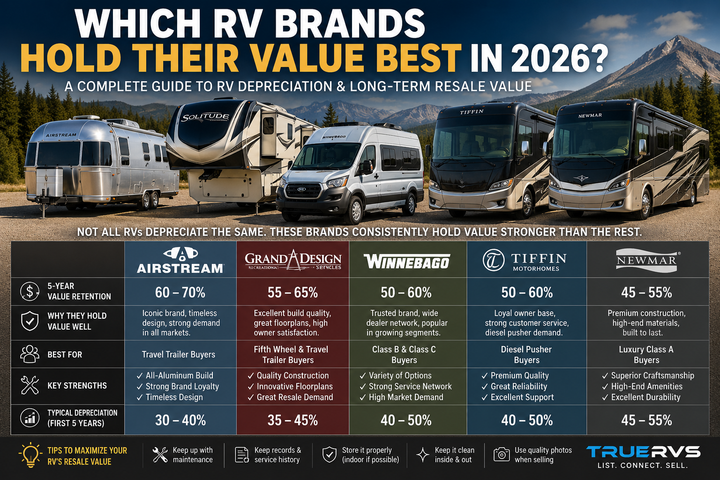
For most RV buyers, the excitement of shopping usually revolves around floorplans, layouts, features, and imagining future road trips. It’s easy to get caught up in the fun part of buying an RV. The kitchen looks great, the bunkhouse fits the kids perfectly, the storage feels massive, and the living room feels comfortable enough to spend weeks on the road.
But there’s one part of the buying process many people overlook:
What happens when it’s time to sell?
That’s where depreciation becomes one of the most important parts of the entire decision.
An RV is not just a purchase. It’s an asset—one that can lose value quickly if you buy the wrong brand, wrong model, or wrong type.
Some RVs lose 20% to 30% of their value in the first year alone.
Others hold remarkably strong.
And over a five-year ownership period, that difference can mean tens of thousands of dollars.
That’s why understanding which RV brands hold value best is one of the smartest things a buyer can do before making a purchase.
In 2026, this matters even more.
Inventory is easier to compare.
Buyers are more educated.
And marketplaces like TrueRVs make pricing far more transparent, which means the strongest brands continue to stand out faster.
If you’re buying with long-term value in mind, this guide breaks down the RV brands that historically hold value the best—and why.
Why Do Some RVs Depreciate Faster Than Others?
Not all depreciation is equal.
That’s one of the biggest misconceptions in the RV world.
Many first-time buyers assume all RVs lose value at roughly the same pace, but that’s far from true.
Depreciation is heavily influenced by several factors.
Brand reputation is one of the biggest.
Brands with stronger reputations create stronger buyer confidence in the used market. When buyers trust the brand, demand stays healthier, which supports pricing.
Build quality also plays a major role.
An RV that holds up physically over time naturally holds value better. If a brand becomes known for leaks, poor fit and finish, weak cabinetry, or frequent warranty issues, that reputation hurts resale.
Market demand matters too.
Certain RV segments become hotter than others. For example, Class B vans have seen explosive demand over the last several years, which has helped brands like Winnebago and Airstream hold value exceptionally well.
Serviceability is another major factor.
Brands with larger dealer networks and better parts availability often perform better because buyers feel safer purchasing them used.
And finally, owner communities matter.
A strong owner base creates loyalty, and loyalty helps create demand.
That’s something many buyers underestimate.
Which Types of RV Hold Their Value Best?
Before talking about brands, it’s important to understand that RV class itself can impact depreciation.
Class B motorhomes generally hold value better than most other RV types right now.
That’s largely because demand remains extremely high, supply is tighter, and they appeal to a broader range of buyers.
Travel trailers vary heavily depending on brand.
Premium brands tend to hold value much better than entry-level brands.
Fifth wheels often hold solid value when built by stronger manufacturers, especially in full-time living segments.
Luxury Class A motorhomes can hold value well at the high end, but they often experience larger raw dollar depreciation because of their price points.
This matters because the type of RV you buy affects the brand conversation.
A strong Class B may outperform a weaker fifth wheel in resale, even if both are the same age.
That’s why smart buyers compare both type and brand before purchasing.
Airstream: The Gold Standard of RV Resale
If there’s one brand consistently associated with long-term value retention, it’s Airstream.
Airstream has created something most RV manufacturers never achieve:
timeless demand.
Its aluminum body design has remained iconic for decades. Unlike many RVs that feel outdated after a few years, Airstream’s design ages unusually well.
That matters.
A ten-year-old Airstream can still look highly desirable.
Its reputation for craftsmanship, durability, and premium quality keeps demand strong in both dealer and private markets.
Airstream also benefits from brand identity.
People specifically shop for Airstream.
That level of brand-specific demand creates stronger resale.
For buyers focused on minimizing depreciation, Airstream remains one of the safest bets in the industry.
Grand Design RV: One of the Strongest Towable Brands
Grand Design has become one of the most respected names in towables.
What makes Grand Design stand out is consistency.
Their fifth wheels and travel trailers have built a strong reputation for quality, customer support, and practical floorplans.
Models like the Solitude and Reflection remain highly sought after.
One reason Grand Design performs so well in resale is because of its owner satisfaction.
Satisfied owners talk.
That creates stronger word-of-mouth demand.
And in RVs, reputation spreads fast.
For buyers considering towables, Grand Design continues to be one of the strongest brands for long-term value.
Winnebago: Strong Across Multiple Categories
Few brands have the broad market recognition of Winnebago.
That brand trust matters in resale.
Winnebago performs especially well in the Class B and smaller Class C segments, where demand remains strong.
Models like the Revel, Travato, and View continue to hold value because they align with current market trends—mobility, off-grid capability, and easier ownership.
Winnebago’s widespread dealer and service network also adds value.
Buyers feel safer buying a used RV when they know parts and service are accessible.
That trust supports stronger resale.
Tiffin Motorhomes: Loyalty Creates Value
Tiffin has built one of the most loyal owner communities in the RV world.
That matters more than most people realize.
Brand loyalty helps create a stronger used market because many buyers specifically seek Tiffin when upgrading.
Its diesel pushers and luxury Class A models are known for quality and service support.
That keeps resale healthier than many competitors.
Newmar: Premium Build Quality Pays Off
Newmar has long been associated with premium craftsmanship.
Its focus on higher-end materials, stronger build standards, and long-term durability gives it an edge in resale.
Luxury buyers care deeply about quality.
That’s where Newmar benefits.
Even older units often retain strong interest because buyers know what they’re getting.
Should You Buy New or Used If Resale Matters?
If resale value is a priority, buying lightly used is often the smartest move.
The first owner usually absorbs the steepest depreciation.
That creates opportunity.
A two-to-four-year-old RV from a strong brand can often provide the best value balance between price, condition, and future resale.
This is especially true when shopping brands like Airstream, Grand Design, and Winnebago.
That’s why many experienced buyers focus heavily on used inventory.
On TrueRVs, buyers can compare used inventory, private seller pricing, and dealer listings all in one place to better understand real-world market value.
Final Thoughts
Depreciation is one of the most important parts of RV ownership, whether buyers realize it or not.
The brand you choose can directly impact how much money you lose—or save—when it’s time to sell.
While no RV is immune to depreciation, some brands consistently perform better because of stronger quality, better reputation, higher demand, and stronger owner loyalty.
Airstream remains the benchmark.
Grand Design continues to dominate towables.
Winnebago stays strong in motorized.
Tiffin and Newmar remain premium resale leaders.
Buying smart isn’t just about finding the right floorplan.
It’s about protecting your money.
And if you’re ready to compare real-world pricing across the strongest RV brands, browse inventory on TrueRVs and see what today’s market looks like.