
The RV Marketplace Is Broken — Here's What Needs To Change

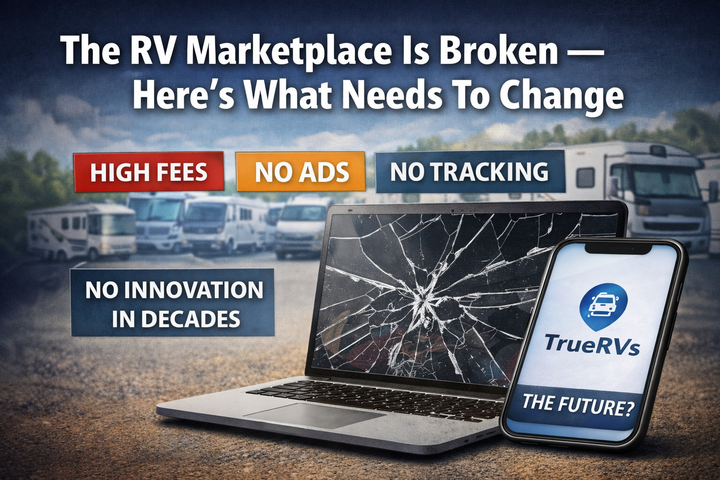
The RV industry has evolved in nearly every way imaginable. The units are smarter. The technology inside them is better. The buyers are more informed than ever. Dealers have adapted their lots, their financing, their customer experience.
But there's one area of this industry that hasn't evolved at all. And it's quietly costing dealers thousands of dollars every single month.
The RV marketplace.
Let's be honest. The way RV marketplaces operate today is fundamentally broken. And the fact that most dealers have just accepted it as "the cost of doing business" doesn't make it okay. It makes it a bigger problem.
It's time to talk about what's actually happening, why it's failing dealers, and what needs to change.
You're Paying More and Getting Less
Let's start with the obvious. Dealers are paying premium prices to list their inventory on legacy RV marketplaces. And what exactly are they getting for that money?
A listing.
That's it. A listing on a page alongside hundreds of thousands of other listings from dealers all over the country. Your inventory gets uploaded, it sits there, and you hope that someone happens to scroll far enough to find it.
No advertising on your individual units. No strategic showcasing. No real effort to drive buyer traffic specifically to your inventory. Just a spot on a massive digital shelf next to every other dealer doing the exact same thing.
And for that you're writing a check every single month.
Think about what you're actually paying for. You're paying for the privilege of existing on a platform. Not for results. Not for leads. Not for sales. Just for being there. That's not a partnership. That's a toll booth.
Zero Innovation in Decades
Here's what makes this even more frustrating. These legacy platforms have barely changed in years. The interface looks the same. The features are the same. The experience for both dealers and buyers is the same.
Meanwhile every other industry has been revolutionized by technology. Real estate has Zillow and Redfin with AI-powered recommendations, interactive maps, and personalized search experiences. The auto industry has platforms with instant trade-in valuations, virtual showrooms, and advanced matching algorithms.
And the RV industry? We're still operating like it's 2010.
The marketplace you're listing on right now was not built for the way people shop today. Buyers expect a modern experience. They expect personalization. They expect to feel like the platform is working for them, not just throwing a wall of listings at them and saying "good luck."
If the platform you're paying isn't innovating, it's stagnating. And if it's stagnating, it's taking your money while delivering a declining return.
The Buyer Experience Is Broken Too
This isn't just a dealer problem. The buyer side of these legacy marketplaces is equally broken. And that directly affects you as a dealer.
Think about what a buyer goes through on a traditional RV marketplace. They go to the site. They're hit with an overwhelming number of listings. They try to filter by type, price, location. They get hundreds of results that sort of match but not really. There's no guidance. No personalization. No help.
So what do they do? They get frustrated. They leave. Or worse, they default to the first few listings on the page, which are usually the dealers who paid the most to be at the top. Not the best units. Not the best dealers. Just the ones who paid for placement.
That means if you're not paying for top placement you're essentially invisible. And even if you are paying for it you're competing in a pay-to-play system that has nothing to do with the quality of your inventory or your dealership.
The buyer never finds the right RV. The dealer never connects with the right buyer. And the only one winning is the platform collecting fees from everyone.
No Tracking, No Transparency, No Accountability
Here's another major issue that doesn't get talked about enough. Most legacy RV marketplaces give you little to no real data on how your listings are performing.
How many people actually viewed your specific units? How many clicked through to your contact info? Where did those buyers come from? What search terms led them to your listing? Which units are generating interest and which are sitting dead?
Most dealers can't answer these questions because the platforms they're using don't provide that level of transparency.
And if you can't track it you can't improve it. You're flying blind every single month, writing checks based on faith rather than data. That's not how successful businesses operate in 2026.
Every marketing dollar you spend should be measurable. You should know exactly what's working, what's not, and where to adjust. A marketplace that takes your money but doesn't give you the data to evaluate your return isn't a partner. It's a black hole.
What a Modern RV Marketplace Should Actually Look Like
So what needs to change? Everything.
A modern RV marketplace should be built around three core principles: visibility, technology, and accountability.
Visibility means your inventory doesn't just get listed — it gets showcased. It gets put in front of the right buyers through targeted advertising. Your units aren't buried under a mountain of competing listings. They're highlighted, promoted, and positioned to be found by people who are actively looking for exactly what you have.
Technology means the platform is leveraging the tools available in 2026 to create a better experience for both dealers and buyers. AI-powered search that matches buyers with the right RV based on their specific needs. Smart recommendations. Personalized shopping experiences that guide the buyer toward a purchase instead of overwhelming them with options.
Accountability means full tracking and transparency. You should be able to see every click, every lead, every interaction with your listings. You should know exactly what your investment is producing. And the platform should be measured by results, not just by how long it's been around.
This isn't a fantasy. This is what TrueRVs was built to be.
TrueRVs — Built for the Way Business Is Done Now
TrueRVs exists because the industry needed something better. We looked at what dealers were dealing with and asked a simple question: why are you paying so much for so little?
On TrueRVs your inventory isn't just listed. It's showcased. We run ads on your units to drive real buyer traffic to your listings. We provide robust tracking features so you can see exactly how your inventory is performing. And our AI-powered shopper creates a personalized experience for every buyer that visits the platform, matching them with the right units based on what they actually need.
The result? Better visibility for your inventory. More qualified leads coming to you. Less wasted time. Less wasted money. More sales.
We're not asking dealers to take a leap of faith. We're asking them to look at what they're currently getting and ask themselves if they're truly satisfied with the return. If the answer is no, the answer is TrueRVs.
The Marketplace Doesn't Need a Facelift. It Needs a Replacement.
The RV marketplace model isn't just outdated. It's fundamentally misaligned with what dealers and buyers need in 2026. Patching it up won't fix it. Adding a new feature here and there won't fix it. The foundation itself is the problem.
What's needed is a complete rethinking of what an RV marketplace should be. A platform built from the ground up with modern technology, dealer-first values, and a genuine commitment to driving results — not just collecting fees.
That's what TrueRVs is building. And the dealers who recognize the shift early are the ones who will benefit the most.
The RV marketplace is broken. But it doesn't have to stay that way.
TrueRVs. The marketplace built for the way business is done now.