
RV Depreciation Explained in 2026: What Your RV Is Really Worth

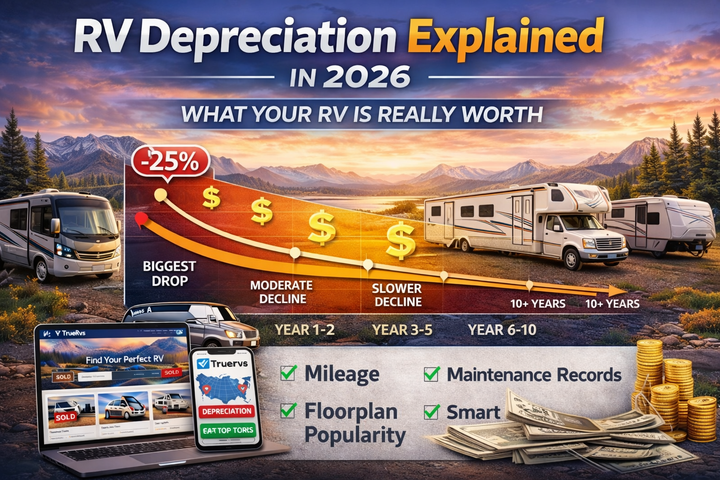
If you’re asking, “How much is my RV worth?”, you’re really asking about depreciation.
Understanding RV depreciation is one of the most important parts of selling strategically — and buying smart.
In 2026, resale value depends on more than just age.
It depends on timing, condition, demand, and how you position your RV in the marketplace.
Let’s break it down clearly.
Do RVs Depreciate Like Cars?
Short answer: No.
While RVs do depreciate, they follow a different curve than standard vehicles.
General RV depreciation pattern:
- Year 1–2: Largest drop (often 15–25%)
- Years 3–5: Moderate decline
- Years 6–10: Slower depreciation, condition-driven
- After 10 years: Value stabilizes based on maintenance and demand
But those numbers vary based on RV type.
Depreciation by RV Type
Different RV categories hold value differently.
Class A Motorhomes
- Larger initial depreciation
- Higher resale demand for diesel pushers
- Condition and mileage heavily influence price
Class C Motorhomes
- Strong mid-market demand
- Stable depreciation after year 3
- Popular layouts retain value better
Class B Vans
- Currently strong resale performance
- Lower supply keeps pricing competitive
- Premium brands hold value well
Fifth Wheels
- Moderate depreciation
- High demand for full-time living units
Travel Trailers
- Higher supply can increase price sensitivity
- Brand reputation matters significantly
Understanding category demand helps determine resale strategy.
What Impacts RV Resale Value in 2026?
Depreciation isn’t fixed.
These factors heavily influence resale value:
1. Mileage (Motorized Units)
Lower mileage increases buyer confidence.
2. Maintenance Records
Documented service history adds credibility.
3. Brand Reputation
Some brands maintain stronger resale demand.
4. Floorplan Popularity
Certain layouts remain consistently desirable.
5. Upgrades
Solar, lithium batteries, suspension upgrades, and quality modifications can improve appeal — though not always dollar-for-dollar.
6. Market Timing
Selling during peak buying season (late winter through early summer) improves leverage.
How to Calculate What Your RV Is Worth
If you want a realistic valuation:
- Search comparable units nationwide.
- Compare mileage and condition.
- Note how long similar units have been listed.
- Avoid dealer retail pricing comparisons alone.
- Look for actual selling ranges — not just asking prices.
Buyers research nationally.
You should too.
The Emotional Pricing Trap
Many sellers price based on:
- What they paid
- What they owe
- How clean it is
- How much they “love it”
Buyers price based on:
- Market supply
- Comparable listings
- Condition
- Demand
Emotion doesn’t hold resale value.
Market alignment does.
Does Where You List Affect Depreciation Perception?
Yes.
Marketplace structure influences buyer psychology.
On heavily saturated platforms like RV Trader, large inventory volume increases direct price comparison.
On general platforms like Facebook Marketplace, buyer intent varies widely.
When selling on an RV-focused marketplace like Truervs, structured filtering and national visibility help match your RV with buyers actively searching for your exact type of unit.
Better alignment reduces price pressure.
Depreciation is fixed.
Perceived value is not.
How to Slow Depreciation Before Selling
You can’t stop depreciation entirely.
But you can protect value by:
- Maintaining full service records
- Storing properly
- Fixing minor cosmetic issues
- Cleaning thoroughly before listing
- Pricing strategically from day one
The first 14 days of your listing often determine momentum.
Momentum protects price.
The 2026 Used RV Market
Demand remains strong for:
- Well-maintained Class B vans
- Late-model fifth wheels
- Diesel pushers in strong condition
- Travel trailers under $50,000
Overpricing slows sales.
Properly positioned units move.
The market rewards alignment.
Final Thoughts: What Is Your RV Really Worth?
Your RV is worth:
- What comparable units are actually moving for
- What buyers are willing to pay
- What condition justifies
- What timing supports
Depreciation is inevitable.
But how you price, present, and position your RV determines how much equity you preserve.
When valuation strategy aligns with smart marketplace placement — including modern RV-focused platforms like Truervs — sellers maximize outcomes.
Understanding depreciation isn’t just about numbers.
It’s about leverage.