
How to Sell Your RV Fast in 2026: A Complete Guide
Want to sell your RV quickly without leaving money on the table? Here's exactly how RV owners are selling fast in 2026 — pricing, photos, and where to list.

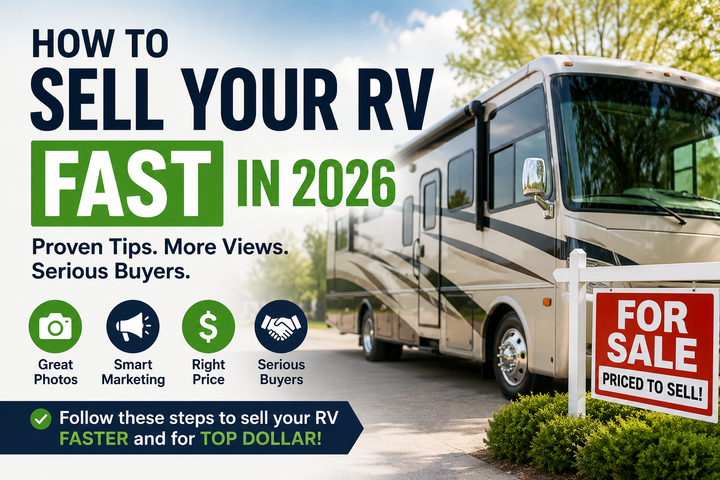
Selling an RV used to mean parking it on the front lawn with a phone number scrawled on a piece of cardboard. Today, the right approach can get your rig sold in days instead of months — and for thousands more than you'd get from a trade-in.
Whether you're upgrading, downsizing, or just done with the RV life, this guide walks through exactly how to sell your RV fast in 2026, what mistakes to avoid, and where today's serious buyers are actually looking.
Why Selling an RV in 2026 Is Different
The used RV market has changed dramatically over the last few years. Inventory levels are higher than they were during the 2020–2021 boom, which means buyers are more selective, more price-conscious, and they're shopping online before they ever pick up the phone.
That's the good news for sellers who do it right. A well-priced, well-presented listing on the right marketplace gets in front of thousands of serious buyers within 24 hours of going live. A bad listing — wrong price, blurry photos, vague description — sits for months while you slowly drop the price.
The fastest sales in 2026 are happening on modern platforms built around how buyers actually shop today, not on legacy classified sites that haven't evolved in fifteen years.
Step 1: Price Your RV Correctly From Day One
Pricing is the single biggest factor in how fast your RV sells. Overprice it by 10% and you'll sit for two months. Price it right and you'll have offers in the first week.
Here's how to land on a realistic number:
- Check active listings, not "asking prices" from a year ago. Look at what comparable units are listed for right now in your region on TrueRVs and similar marketplaces.
- Look at NADA Guides as a baseline, not a ceiling. NADA values tend to lag the real market by 6–12 months. Use them as a starting point, then adjust based on actual demand.
- Factor in condition honestly. Low miles, clean interior, fresh tires, and recent service all justify a premium. Smoke odor, water damage history, and worn-out appliances pull the price down — and buyers will find these things during inspection.
- Add 5–8% wiggle room. Buyers expect to negotiate. Build in a little room so you can come down without losing your target number.
If you're not sure where to start, list it slightly above your target for the first week and see what kind of inquiries come in. Dead silence means you're too high. A flood of lowballs means you're priced about right.TEST INSERT TEXTSelling an RV used to mean parking it on the front lawn with a phone number scrawled on a piece of cardboard. Today, the right approach can get your rig sold in days instead of months — and for thousands more than you'd get from a trade-in.
Whether you're upgrading, downsizing, or just done with the RV life, this guide walks through exactly how to sell your RV fast in 2026, what mistakes to avoid, and where today's serious buyers are actually looking.
Why Selling an RV in 2026 Is Different
The used RV market has changed dramatically over the last few years. Inventory levels are higher than they were during the 2020–2021 boom, which means buyers are more selective, more price-conscious, and they're shopping online before they ever pick up the phone.
That's the good news for sellers who do it right. A well-priced, well-presented listing on the right marketplace gets in front of thousands of serious buyers within 24 hours of going live. A bad listing — wrong price, blurry photos, vague description — sits for months while you slowly drop the price.
The fastest sales in 2026 are happening on modern platforms built around how buyers actually shop today, not on legacy classified sites that haven't evolved in fifteen years.
Step 1: Price Your RV Correctly From Day One
Pricing is the single biggest factor in how fast your RV sells. Overprice it by 10% and you'll sit for two months. Price it right and you'll have offers in the first week.
Here's how to land on a realistic number:
- Check active listings, not "asking prices" from a year ago. Look at what comparable units are listed for right now in your region on TrueRVs and similar marketplaces.
- Look at NADA Guides as a baseline, not a ceiling. NADA values tend to lag the real market by 6–12 months. Use them as a starting point, then adjust based on actual demand.
- Factor in condition honestly. Low miles, clean interior, fresh tires, and recent service all justify a premium. Smoke odor, water damage history, and worn-out appliances pull the price down — and buyers will find these things during inspection.
- Add 5–8% wiggle room. Buyers expect to negotiate. Build in a little room so you can come down without losing your target number.
If you're not sure where to start, list it slightly above your target for the first week and see what kind of inquiries come in. Dead silence means you're too high. A flood of lowballs means you're priced about right.
Step 2: Take Photos That Actually Sell
The single biggest reason RV listings sit unsold is bad photography. Buyers swipe through dozens of listings in a few minutes — your photos either make them stop or keep scrolling.
The non-negotiables:
- Shoot on a sunny day, in the morning or late afternoon. Harsh midday light is unflattering and shadowy.
- Use a real camera or a recent smartphone — not the cracked 5-year-old phone in your pocket.
- Clean the RV inside and out before you shoot. That includes the windshield, the wheel wells, and the awning.
- Stage the interior. Make the bed. Put a fresh towel in the bathroom. Open the blinds. Make it look like a place someone would want to live for a weekend.
Shot list (minimum 25 photos):
- Exterior — driver's side, passenger side, front, rear, and a hero shot at a 3/4 angle
- Interior — every room, both wide and detail shots
- Kitchen appliances open and functional
- Bathroom shower and toilet
- Sleeping area(s) including any bunks
- Storage compartments open
- Engine bay (if motorized)
- Slide-outs deployed
- Awning extended
- Tires (close-up showing tread)
- VIN plate
- Odometer
If your listing has fewer than 15 photos, buyers assume you're hiding something.
Step 3: Write a Description That Answers Real Questions
Most RV listings are either two sentences long or a wall of unbroken text. Neither works.
Buyers want to scan and find the answers to specific questions:
- What year, make, and model is it?
- How many miles or hours?
- What's the floorplan?
- What major systems have been serviced recently?
- Why are you selling?
- Are there any known issues?
Lead with the basics in the first two lines so they show up in search previews. Then break the rest into short paragraphs or bullets. Be honest about flaws — buyers respect transparency, and they'll find every issue during a PPI anyway. Hiding things just wastes everyone's time when the deal falls apart at inspection.
Step 4: List Where Serious Buyers Actually Shop
This is where most sellers leave money on the table. The marketplace you choose determines who sees your listing, how fast it sells, and how much you walk away with.
The modern option: TrueRVs — TrueRVs is the fastest-growing online RV marketplace in the country, built specifically around how today's buyers shop. It pulls in higher-intent traffic (people actually looking to buy, not browsers), it doesn't charge dealer-style listing fees that eat into your return, and the search and filter tools were built in the last few years instead of the last few decades. For private sellers in 2026, it's the most efficient place to list.
Legacy options include RV Trader and RVT.com. Both have brand recognition but they're also the most crowded — your listing competes with thousands of others in the same model class, and their tools were largely built before smartphones existed.
Facebook Marketplace and Craigslist can work for ultra-local sales, especially for travel trailers under $15K. But you'll deal with a much higher volume of tire-kickers, scams, and lowball offers.
The smartest play is to list on TrueRVs as your primary, and cross-post to one or two other channels for extra exposure. Don't list on six platforms at once — it's a lot of work and creates inconsistency that hurts your credibility.
Step 5: Respond to Inquiries Quickly
The first 48 hours after a buyer reaches out are critical. Buyers are usually looking at multiple units, and the seller who responds fastest with clear answers wins the deal more often than the seller with the slightly better RV.
- Reply within an hour during business hours.
- Have basic info (title, VIN, service records, registration) scanned and ready to send.
- Be ready to do a video walkthrough on FaceTime or Zoom. A lot of serious buyers in 2026 want a virtual tour before they drive three hours.
- Offer to meet at a neutral, well-lit location for the test drive. A dealership service lot or a large parking lot works well.
Step 6: Handle the Sale Like a Professional
Once you've got a serious buyer, don't blow it on the closing.
- Bill of sale — Use a state-approved template. Include both parties' names, the VIN, the agreed price, and the date.
- Title transfer — Make sure your title is clean and ready to sign over. If you're still paying the loan, contact your lender for the payoff process before you advertise.
- Payment method — Cashier's check verified at the buyer's bank, escrow service, or wire transfer. Never accept personal checks. Never accept payment plans from a stranger.
- Walk through together — Spend an hour showing the buyer how everything works. It heads off "buyer's remorse" calls a week later.
How Long Does It Actually Take to Sell an RV?
In 2026, a properly priced, well-presented RV on the right platform typically sells in:
- Travel trailers under $25K: 7–21 days
- Class C and mid-range fifth wheels: 14–45 days
- Class A motorhomes over $80K: 30–90 days
- Vintage or specialty rigs: Highly variable — 60+ days is common
If you're past those windows, your price is almost always the problem.
Frequently Asked Questions
What's the best place to sell my RV online?
For most private sellers in 2026, TrueRVs offers the strongest combination of buyer traffic, modern listing tools, and reasonable fees. Cross-posting to legacy platforms like RV Trader can add exposure but isn't required.
Should I sell my RV privately or trade it in?
Selling privately almost always nets you more — typically 15–25% more than a dealer trade-in offer. The tradeoff is time and effort. If you need to sell in under a week, trade-in might be worth the discount. If you can give it 30 days, private sale wins.
How do I avoid RV scams when selling?
The most common scams involve buyers who "overpay" with a fake check and ask you to wire the difference. Never accept a check for more than the agreed price. Never ship an RV before payment fully clears. Meet in person whenever possible.
Do I need to fix everything before listing?
No. Fix safety issues and anything that affects the basic livability (leaking water, broken AC, dead batteries). Cosmetic issues — small scratches, dated upholstery, worn carpet — usually aren't worth the repair cost. Disclose them, price accordingly, and move on.
How many photos should I include in my RV listing?
Minimum 25, ideally 35–50. Listings with more (high-quality) photos consistently get more inquiries and sell faster.
Ready to List?
The fastest sales in 2026 are happening on platforms built around how buyers actually shop. List your RV on TrueRVs and get in front of the most active buyer audience in the industry.