
How to Price My RV to Sell Fast in 2026 (Without Leaving Money on the Table)

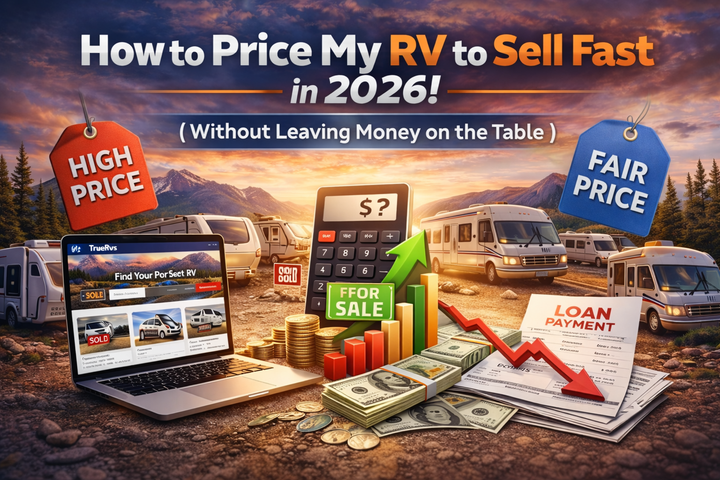
If you’re asking, “How do I price my RV to sell?”, you’re already ahead of most sellers.
Because the biggest mistake people make when selling an RV in 2026 isn’t bad photos.
It’s bad pricing.
Price too high?
Your listing sits.
Price too low?
You lose thousands.
The goal isn’t just to sell fast.
It’s to sell smart.
Why Pricing Strategy Matters More Than Ever in 2026
Today’s RV buyers are:
- Comparing listings nationwide
- Checking resale trends
- Reviewing depreciation curves
- Monitoring similar units
That means your RV isn’t competing locally.
It’s competing against every similar RV online.
If you want to sell your RV fast, pricing must be strategic from day one.
Step 1: Understand RV Depreciation
RVs depreciate differently than cars.
General rule of thumb:
- First 1–2 years: biggest drop
- Years 3–5: moderate decline
- After 5 years: condition matters more than age
But depreciation isn’t uniform.
Factors that impact resale value:
- Mileage (motorhomes)
- Maintenance records
- Brand reputation
- Layout popularity
- Slide-outs
- Upgrades
- Storage condition
A well-maintained RV with strong documentation can outperform market averages.
Step 2: Research Comparable Listings Nationwide
If you want to price your RV correctly, do not rely on:
- What you paid
- What you owe
- What you “feel it’s worth”
Instead:
- Search the same year, make, and model nationwide.
- Compare mileage and condition.
- Ignore obvious outliers.
- Note how long similar units have been sitting.
If similar RVs have been listed for 90+ days at $94,000 and aren’t selling, pricing yours at $96,000 won’t help.
The market sets the price.
Not emotion.
Step 3: The 14-Day Rule
The first 14 days of your listing are your highest leverage window.
That’s when:
- Your listing feels fresh
- Buyers are most curious
- Algorithms give initial visibility
If you overprice at launch, you waste your strongest momentum window.
And when a listing sits too long, buyers start asking:
“What’s wrong with it?”
Momentum is money.
Step 4: Strategic Pricing Bands
Instead of pricing at the very top of the market, consider:
Aggressive Strategy (Faster Sale)
Price slightly below comparable listings.
This creates:
- More inquiries
- Competitive tension
- Stronger negotiation positioning
Balanced Strategy (Optimal Outcome)
Price in the middle of market range.
Premium Strategy (Slower Sale)
Price at the high end — only if:
- Condition is exceptional
- Documentation is strong
- Demand is high
In most cases, balanced pricing wins.
Step 5: Avoid the “Emotional Premium”
Many sellers think:
“I upgraded the mattress.”
“I installed solar.”
“It’s spotless.”
Upgrades add value — but not dollar-for-dollar.
Buyers care about:
- Function
- Reliability
- Fair pricing
Overvaluing emotional attachment slows sales dramatically.
Step 6: Choose the Right Marketplace for Your Price Strategy
Here’s something most sellers overlook:
Where you list affects perceived value.
On heavily saturated platforms like RV Trader, buyers see thousands of competing listings.
That environment increases price sensitivity.
On social platforms like Facebook Marketplace, casual browsing often leads to aggressive negotiation.
When selling on a focused RV marketplace like Truervs, pricing clarity combined with RV-specific filtering helps connect you with buyers who are actively searching for your exact type of unit.
That alignment improves price positioning.
Step 7: Signal Confidence in Your Listing
When buyers message you, frame your pricing strategically.
Instead of:
“Price is negotiable.”
Say:
“Priced competitively based on current national market comps.”
That signals you’ve done your homework.
Confidence preserves leverage.
Step 8: Watch the Market After Listing
If you receive:
- Zero serious inquiries in 10–14 days
- Only extreme lowball offers
You may need to adjust.
Small pricing adjustments can dramatically increase engagement.
But avoid repeated drastic price drops.
That signals desperation.
Common Pricing Mistakes
- Pricing based on loan balance
- Matching dealer pricing without dealer warranty
- Ignoring national comps
- Starting too high “to leave room to negotiate”
- Dropping price too quickly
Smart pricing is proactive — not reactive.
Final Thoughts: Pricing for Speed and Strength
If your goal is to sell your RV fast in 2026 while protecting your equity:
- Research nationwide comps
- Price realistically from day one
- Use strong presentation
- Choose your marketplace strategically
When price, positioning, and platform align, sales happen quickly.
And when they don’t, listings sit.
Pricing isn’t guesswork.
It’s strategy.