
How to Avoid Lowball Offers When Selling an RV in 2026

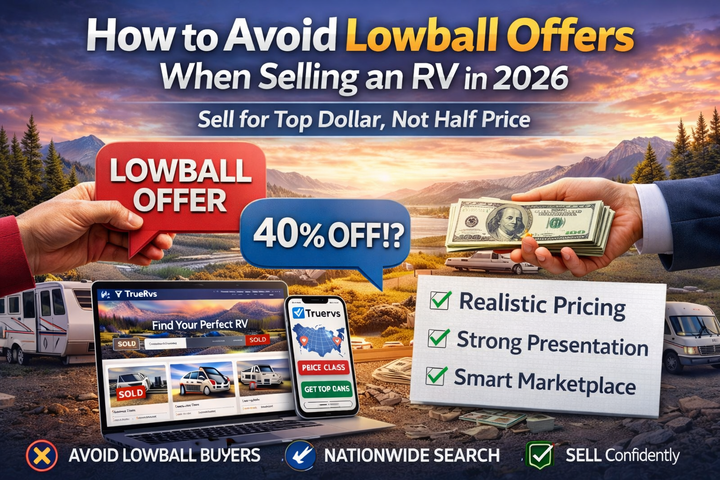
If you’ve listed an RV before, you know the frustration.
You price it fairly.
You clean it up.
You write a solid description.
Then the messages start:
“Will you take 40% less?”
“What’s your bottom dollar?”
“Cash today for half.”
Lowball offers are one of the biggest frustrations for private sellers.
But here’s the truth:
Lowballing isn’t random.
It’s usually the result of how — and where — you list your RV.
Let’s break down how to avoid it.
Why Lowball Offers Happen
Lowball offers typically happen when:
- Your pricing isn’t clearly justified
- The platform attracts casual buyers
- Inventory is oversaturated
- Your listing lacks authority signals
- You appear flexible or desperate
Buyers test weakness.
Your job is to remove it.
Step 1: Price Strategically From Day One
If you price too high expecting to “leave room to negotiate,” you attract aggressive negotiators.
Why?
Because buyers assume:
“If they overpriced it, they expect to come down.”
Instead:
- Research nationwide comps
- Price within realistic range
- Avoid emotional premiums
Fair pricing reduces extreme offers.
When buyers believe your RV is positioned correctly, they negotiate within reason.
Step 2: Build Authority Into Your Listing
Lowballers target uncertainty.
Strong listings discourage weak offers.
Include:
- Full maintenance history
- Clear mileage
- VIN (optional but credible)
- 20+ high-quality photos
- Transparent disclosures
The more complete your listing, the less room buyers have to “poke holes.”
Authority protects price.
Step 3: Choose the Right Marketplace
This is one of the most overlooked factors.
Some platforms attract:
- Casual browsers
- Bargain hunters
- Non-serious inquiries
For example:
Facebook Marketplace often generates high message volume — but mixed buyer intent.
RV Trader has strong traffic — but also heavy inventory competition, which increases buyer leverage.
When inventory feels unlimited, buyers negotiate harder.
On RV-focused marketplaces like Truervs, filtering tools help connect sellers with buyers actively searching for specific RV types.
Higher intent reduces lowball frequency.
Platform structure influences buyer behavior more than most sellers realize.
Step 4: Frame Your Negotiation Properly
When someone asks:
“What’s your lowest?”
Never respond with a number immediately.
Instead say:
“I priced it competitively based on current national comps. I’m open to reasonable offers.”
This signals:
- You did your homework
- You aren’t desperate
- You understand market value
Confidence discourages extreme offers.
Step 5: Use Scarcity Without Pressure
If you’re receiving inquiries, let buyers know professionally:
“I’ve had a few serious inquiries this week.”
That communicates demand.
Demand reduces lowball attempts.
But never fabricate interest.
Buyers can sense dishonesty quickly.
Step 6: Avoid Emotional Reactions
Lowball offers can feel insulting.
But emotional responses hurt negotiation leverage.
Instead:
- Stay calm
- Decline respectfully
- Reinforce value
- Keep communication open
Sometimes initial low offers turn into serious buyers later.
Professionalism preserves opportunity.
Step 7: Watch Early Engagement Signals
If your listing receives:
- Zero serious inquiries
- Only extreme low offers
It may indicate:
- Overpricing
- Poor photos
- Weak description
- Wrong platform
Lowballing often signals market misalignment.
Adjust strategically — not emotionally.
Why Platform Choice Impacts Lowball Frequency
Oversaturated marketplaces create:
- Buyer comparison overload
- Aggressive negotiation
- Perceived unlimited options
When buyers feel they have endless alternatives, they push harder.
Focused RV marketplaces with structured filtering help match serious buyers with relevant listings — which improves offer quality.
That alignment reduces noise.
Final Thoughts: Selling Without Getting Lowballed
If you want to sell your RV in 2026 without constant lowball frustration:
- Price realistically
- Present professionally
- Communicate confidently
- Choose your marketplace strategically
Lowball offers aren’t inevitable.
They’re often a symptom of poor positioning.
When price, presentation, and platform align, negotiation improves dramatically.
And when negotiation improves, your final sale price does too.